Word Explanation
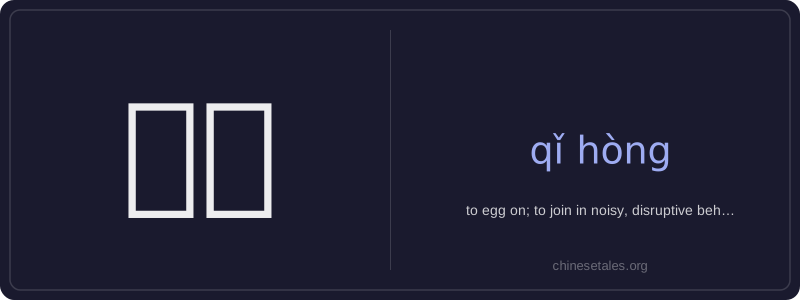
起哄 is a verb meaning 'to egg on' or 'to join in noisy, disruptive group behavior'—often to provoke, tease, or encourage someone (or something) in an unruly or playful way. The character 起 means 'to rise' or 'to start', and 哄 means 'to shout noisily' or 'to stir up'. Together, they evoke the image of people collectively raising their voices to incite action or amplify chaos. It often carries a mildly negative or teasing connotation, implying lack of serious intent but potential for escalation.
This term is commonly used in informal spoken Chinese, especially among peers or in crowds—like at parties, sports events, or online comment sections. While sometimes light-hearted (e.g., cheering someone on playfully), it can also describe harmful mob-like behavior if unchecked. It’s rarely used in formal writing or respectful contexts, and almost never with authority figures or in solemn situations.
Example Sentences
Related Words
国语
‘Guó yǔ’ literally means 'national language'—
无论谁
‘无论谁’ (wú lùn shéi) is a pronoun meaning
外语
‘外语’ literally means ‘outside language’ —
不对
不对 (bù duì) literally combines 不 (bù), meani
我的
我的 (wǒ de) is a possessive pronoun meaning 'my'
违规
违规 (wéi guī) literally means 'to violate rules
亲笔
‘亲笔’ literally means ‘one’s own hand’—comb
面条
‘面条’ (miàn tiáo) literally means ‘flour str