Word Explanation
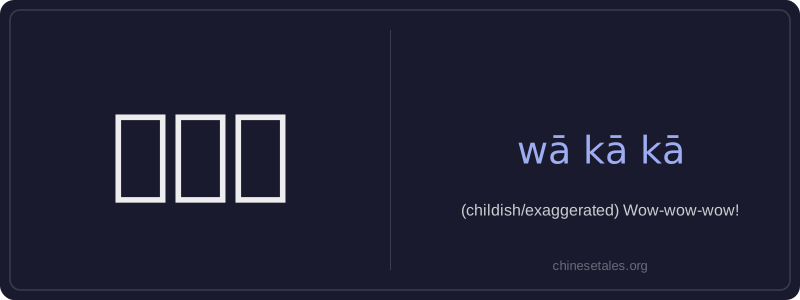
'Wow-kā-kā' (wā kā kā) is a playful, exaggerated interjection used to express sudden, childlike amazement or delight—often with theatrical flair. It mimics the sound of a cartoon character’s over-the-top reaction: 哇 (wā) functions as the initial gasp of surprise, while the repeated 咔咔 (kā kā) adds rhythmic, onomatopoeic energy, evoking clapping, snapping fingers, or even a cartoonish 'pop!' sound. Though not standard in formal speech, it’s widely recognized in informal spoken Chinese, especially among young people and online.
This expression thrives in lighthearted contexts: reacting to cute animals, unexpected gifts, funny memes, or silly pranks. Its tone is intentionally childish and hyperbolic—never sarcastic or critical—and it often appears in voice messages, social media comments, or animated storytelling. Unlike neutral exclamations like 啊 or 哇 alone, 哇咔咔 carries an unmistakable layer of performative joy and whimsy, making it a favorite in internet culture and youth-oriented content.
Example Sentences
Related Words
国语
‘Guó yǔ’ literally means 'national language'—
无论谁
‘无论谁’ (wú lùn shéi) is a pronoun meaning
外语
‘外语’ literally means ‘outside language’ —
不对
不对 (bù duì) literally combines 不 (bù), meani
我的
我的 (wǒ de) is a possessive pronoun meaning 'my'
违规
违规 (wéi guī) literally means 'to violate rules
亲笔
‘亲笔’ literally means ‘one’s own hand’—comb
面条
‘面条’ (miàn tiáo) literally means ‘flour str