Word Explanation
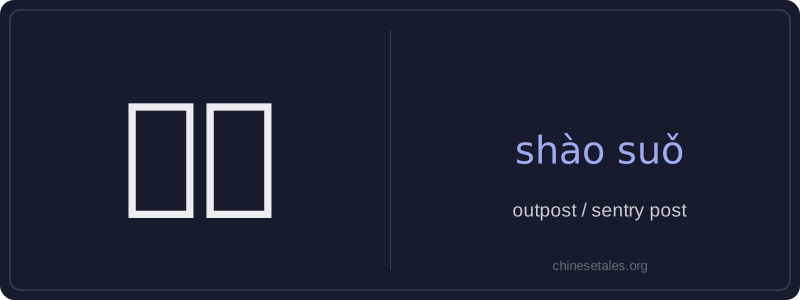
‘哨所’ (shào suǒ) literally combines 哨 (shào), meaning 'whistle' or, in military contexts, 'sentry' or 'lookout', and 所 (suǒ), a common noun suffix meaning 'place' or 'location'. Together, it refers to a small, often remote military post where soldiers stand guard, observe surroundings, and monitor activity—typically at borders, mountain passes, or coastal areas. It emphasizes function over size: a 哨所 is not a full base but a minimal, functional station for surveillance and early warning.
This term carries a distinctly formal, institutional, and sometimes solemn connotation—it appears frequently in official reports, news about border defense, and literature describing frontier life. While civilian equivalents exist (e.g., security booths), 哨所 specifically implies state-authorized, armed military presence. It’s rarely used metaphorically and almost never in casual speech; instead, it evokes discipline, isolation, and duty.
Example Sentences
Related Words
国语
‘Guó yǔ’ literally means 'national language'—
无论谁
‘无论谁’ (wú lùn shéi) is a pronoun meaning
外语
‘外语’ literally means ‘outside language’ —
不对
不对 (bù duì) literally combines 不 (bù), meani
我的
我的 (wǒ de) is a possessive pronoun meaning 'my'
违规
违规 (wéi guī) literally means 'to violate rules
亲笔
‘亲笔’ literally means ‘one’s own hand’—comb
面条
‘面条’ (miàn tiáo) literally means ‘flour str