Word Explanation
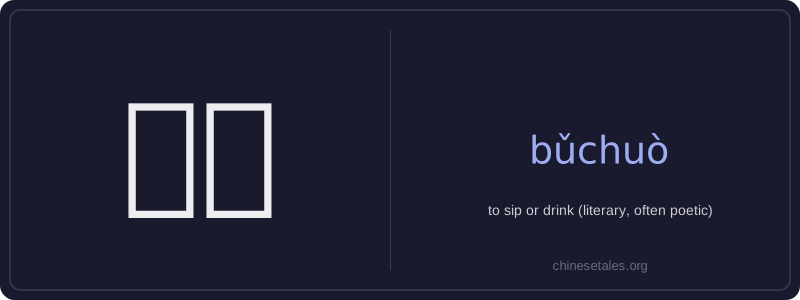
‘哺啜’ is a literary, poetic verb meaning ‘to sip’ or ‘to drink gently and slowly’, often evoking delicacy, quiet contemplation, or nurturing imagery. Though composed of two characters—‘哺’ (bǔ), which means ‘to feed’ (especially young or vulnerable beings), and ‘啜’ (chuò), meaning ‘to sip’ or ‘to suck’—the compound emphasizes the soft, rhythmic, almost tender action of drinking small amounts, typically with emotional or aesthetic resonance. It rarely appears in everyday speech and is more common in classical poetry, lyrical prose, or descriptive writing about nature or caregiving.
The word carries connotations of gentleness and intimacy: it might describe a mother bird feeding her chicks, a scholar sipping tea at dawn, or dew ‘sipping’ from petals in metaphorical usage. Its tone is elevated and refined, making it unsuitable for casual conversation or commands. Because both characters individually suggest oral intake (especially of liquids or nourishment), the compound subtly reinforces themes of sustenance, care, and quiet vitality.
Example Sentences
Related Words
国语
‘Guó yǔ’ literally means 'national language'—
无论谁
‘无论谁’ (wú lùn shéi) is a pronoun meaning
外语
‘外语’ literally means ‘outside language’ —
不对
不对 (bù duì) literally combines 不 (bù), meani
我的
我的 (wǒ de) is a possessive pronoun meaning 'my'
违规
违规 (wéi guī) literally means 'to violate rules
亲笔
‘亲笔’ literally means ‘one’s own hand’—comb
面条
‘面条’ (miàn tiáo) literally means ‘flour str