Word Explanation
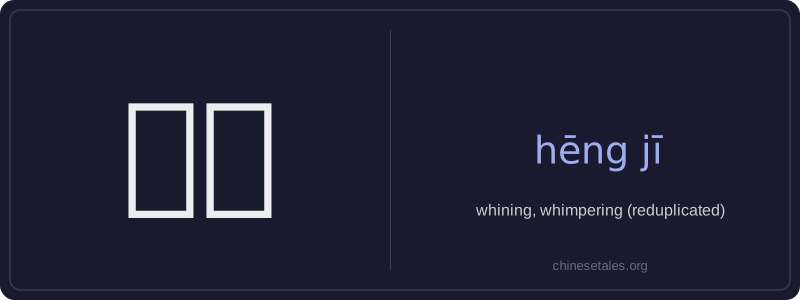
‘哼唧’ (hēng jī) is a reduplicated onomatopoeic word that imitates the sound of soft, repetitive whining or whimpering—often expressing mild discomfort, complaint, or petulance without full-blown crying. The first character 哼 (hēng) conveys nasal, grunting sounds (like sighing or protesting), while 唧 (jī) adds a light, high-pitched, repetitive quality, reinforcing the sense of fussy, low-volume vocalization. Together, they form a vivid, informal expression used mainly in spoken Chinese.
This term is commonly applied to babies, young children, or even pets (e.g., a restless puppy) making such sounds—typically when tired, hungry, hurt, or seeking attention. It carries a gentle, slightly affectionate or teasing tone rather than harsh judgment; it’s rarely used for serious distress. Though grammatically flexible, ‘哼唧’ most often functions as a verb (e.g., ‘宝宝在哼唧’) or a noun (e.g., ‘听这哼唧声’), and it’s almost always used in colloquial, intimate contexts—not formal writing or speech.
Example Sentences
Related Words
国语
‘Guó yǔ’ literally means 'national language'—
无论谁
‘无论谁’ (wú lùn shéi) is a pronoun meaning
外语
‘外语’ literally means ‘outside language’ —
不对
不对 (bù duì) literally combines 不 (bù), meani
我的
我的 (wǒ de) is a possessive pronoun meaning 'my'
违规
违规 (wéi guī) literally means 'to violate rules
亲笔
‘亲笔’ literally means ‘one’s own hand’—comb
面条
‘面条’ (miàn tiáo) literally means ‘flour str