Word Explanation
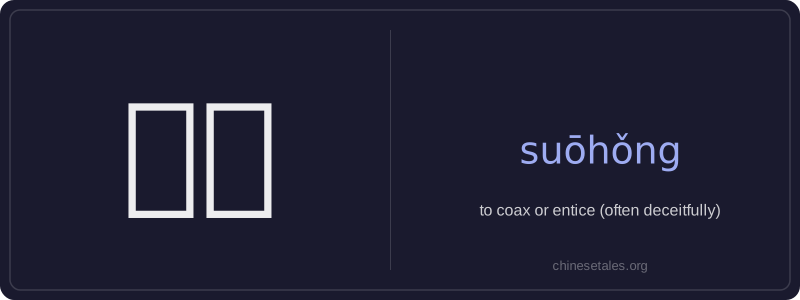
唆哄 is a disyllabic verb meaning to coax, entice, or persuade someone—often with flattery, deception, or underhanded tactics—to do something they might otherwise resist. The first character 唆 (suō) carries the sense of inciting or instigating (as in 唆使, 'to instigate'), while 哄 (hǒng) means to soothe, pacify, or deceive gently (as in 哄骗, 'to trick'). Together, they emphasize manipulative persuasion—less about sincere encouragement and more about exploiting emotion or naivety to achieve a goal.
This word frequently appears in contexts involving children, gullible adults, or vulnerable individuals being led astray. It often implies moral disapproval: the speaker views the coaxing as unethical, self-serving, or potentially harmful. While it can describe light teasing among friends, its default register is critical or cautionary—especially when describing someone urging another to break rules, spend recklessly, or act against their better judgment.
Example Sentences
Related Words
国语
‘Guó yǔ’ literally means 'national language'—
无论谁
‘无论谁’ (wú lùn shéi) is a pronoun meaning
外语
‘外语’ literally means ‘outside language’ —
不对
不对 (bù duì) literally combines 不 (bù), meani
我的
我的 (wǒ de) is a possessive pronoun meaning 'my'
违规
违规 (wéi guī) literally means 'to violate rules
亲笔
‘亲笔’ literally means ‘one’s own hand’—comb
面条
‘面条’ (miàn tiáo) literally means ‘flour str