Word Explanation
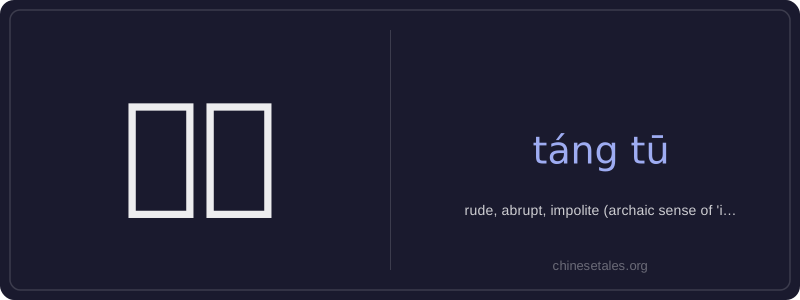
‘唐突’ is an adjective describing behavior that is socially inappropriate—rude, abrupt, or impolite—especially when someone imposes themselves without invitation or proper preparation. The character 唐 originally meant ‘empty’ or ‘in vain’ (as in classical usage), and 突 means ‘to rush forth suddenly’ or ‘to burst out’. Together, they evoke the image of an uninvited, jarring intrusion—like barging into a private conversation or making an unsolicited comment. Though it carries an archaic literary flavor, it remains common in formal writing, polite speech, and self-deprecating expressions.
In modern usage, ‘唐突’ often appears in phrases like ‘唐突地…’ (abruptly…), ‘显得很唐突’ (seems very rude), or ‘唐突了您’ (I’ve imposed on you). It conveys not just rudeness but a subtle breach of social grace—less about anger and more about awkwardness, tactlessness, or violating unspoken boundaries of timing and context.
Example Sentences
Related Words
国语
‘Guó yǔ’ literally means 'national language'—
无论谁
‘无论谁’ (wú lùn shéi) is a pronoun meaning
外语
‘外语’ literally means ‘outside language’ —
不对
不对 (bù duì) literally combines 不 (bù), meani
我的
我的 (wǒ de) is a possessive pronoun meaning 'my'
违规
违规 (wéi guī) literally means 'to violate rules
亲笔
‘亲笔’ literally means ‘one’s own hand’—comb
面条
‘面条’ (miàn tiáo) literally means ‘flour str