Word Explanation
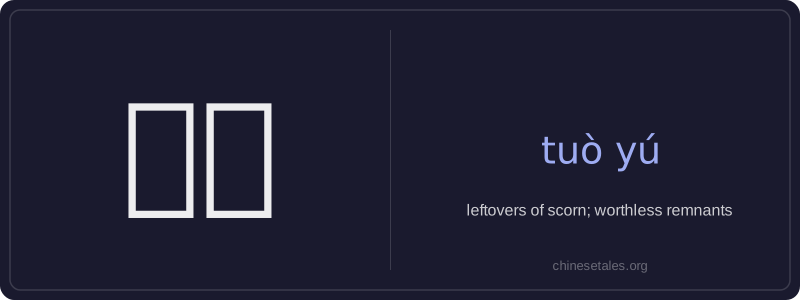
‘唾余’ literally means ‘spittle remnants’—combining 唾 (tuò), meaning ‘spit’ or ‘spittle’, and 余 (yú), meaning ‘remainder’ or ‘leftover’. Historically, spitting was a visceral gesture of contempt in Chinese culture, so ‘spittle remnants’ evolved metaphorically to signify things discarded with disdain: ideas, opinions, or works considered worthless, derivative, or beneath serious attention.
The term carries strong negative connotations and is almost exclusively used in formal or literary contexts—especially in literary criticism, academic discourse, or political rhetoric—to dismiss something as unoriginal, trivial, or contemptible. It often appears in phrases like ‘拾人唾余’ (to pick up others’ spit-remnants), meaning to parrot clichéd or outdated views without independent thought. Though the character 唾 references saliva (an animal-related bodily secretion), the word itself is abstract and metaphorical—not about animals per se, but rooted in an embodied cultural gesture involving the human body.
Example Sentences
Related Words
国语
‘Guó yǔ’ literally means 'national language'—
无论谁
‘无论谁’ (wú lùn shéi) is a pronoun meaning
外语
‘外语’ literally means ‘outside language’ —
不对
不对 (bù duì) literally combines 不 (bù), meani
我的
我的 (wǒ de) is a possessive pronoun meaning 'my'
违规
违规 (wéi guī) literally means 'to violate rules
亲笔
‘亲笔’ literally means ‘one’s own hand’—comb
面条
‘面条’ (miàn tiáo) literally means ‘flour str