Word Explanation
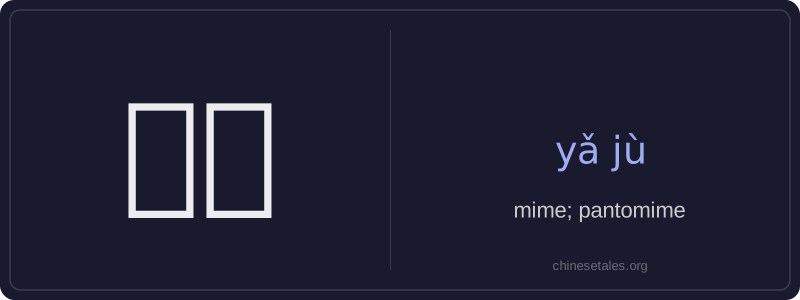
‘哑剧’ (yǎ jù) literally means ‘silent drama’—‘哑’ (yǎ) means ‘mute’ or ‘unable to speak’, and ‘剧’ (jù) means ‘drama’ or ‘play’. Together, they refer to a theatrical performance that conveys story, emotion, and action entirely without spoken words, relying instead on facial expressions, gestures, body movement, and props. It is the standard Chinese term for mime or pantomime as a formal performing art.
While often associated with Western traditions like Marcel Marceau’s style, 哑剧 is also practiced in China, sometimes adapted into children’s theater, street performance, or educational settings to develop nonverbal communication skills. It differs from general gesture-based acting in that it follows established conventions of physical storytelling and usually avoids vocalization—even sighs or laughter are typically suppressed. The term carries a neutral, artistic register and is not used for casual silence or everyday nonverbal behavior.
Example Sentences
Related Words
国语
‘Guó yǔ’ literally means 'national language'—
无论谁
‘无论谁’ (wú lùn shéi) is a pronoun meaning
外语
‘外语’ literally means ‘outside language’ —
不对
不对 (bù duì) literally combines 不 (bù), meani
我的
我的 (wǒ de) is a possessive pronoun meaning 'my'
违规
违规 (wéi guī) literally means 'to violate rules
亲笔
‘亲笔’ literally means ‘one’s own hand’—comb
面条
‘面条’ (miàn tiáo) literally means ‘flour str