Word Explanation
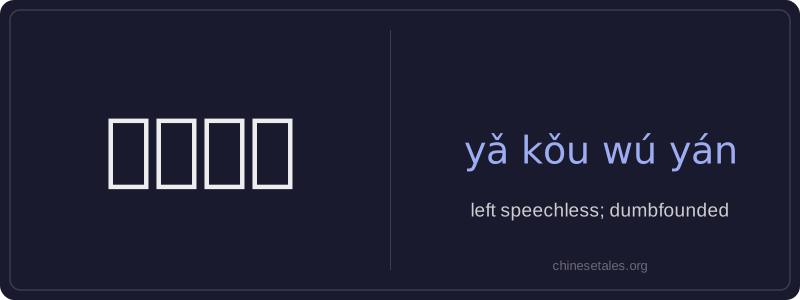
‘哑口无言’ literally means ‘mute mouth, no words’ — combining 哑 (mute), 口 (mouth), 无 (without), and 言 (speech). It describes a state of being completely speechless, usually due to shock, embarrassment, astonishment, or being utterly refuted in an argument. Unlike neutral terms like ‘silent’, this idiom carries strong emotional weight and implies a temporary, involuntary loss of voice — as if one’s mouth has suddenly lost its ability to speak.
This four-character idiom is commonly used in written Chinese and formal spoken contexts, especially when describing reactions to surprising news, clever retorts, or overwhelming evidence. It often appears after verbs like ‘被…’ (be caused by…) or ‘顿时…’ (immediately…), emphasizing suddenness. While it can describe physical muteness, its primary use is figurative — highlighting mental or emotional paralysis rather than medical condition.
Example Sentences
Related Words
国语
‘Guó yǔ’ literally means 'national language'—
无论谁
‘无论谁’ (wú lùn shéi) is a pronoun meaning
外语
‘外语’ literally means ‘outside language’ —
不对
不对 (bù duì) literally combines 不 (bù), meani
我的
我的 (wǒ de) is a possessive pronoun meaning 'my'
违规
违规 (wéi guī) literally means 'to violate rules
亲笔
‘亲笔’ literally means ‘one’s own hand’—comb
面条
‘面条’ (miàn tiáo) literally means ‘flour str