Word Explanation
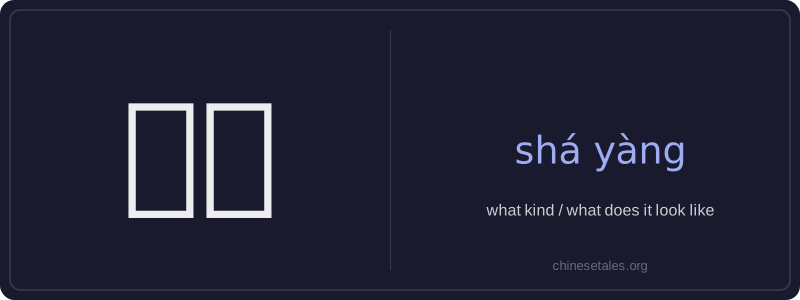
‘啥样’ is an informal, spoken contraction of ‘什么样’, meaning ‘what kind (of)’ or ‘what does it look like?’ It combines the interrogative pronoun ‘啥’ (shá), a colloquial variant of ‘什么’ (shénme, ‘what’), and ‘样’ (yàng), meaning ‘kind’, ‘type’, or ‘appearance’. Together, they form a question phrase used to inquire about the nature, appearance, condition, or characteristics of something — often with a focus on visual or tangible qualities.
This expression is common in northern Mandarin dialects and everyday conversation, especially in casual speech among friends or family. It’s rarely used in formal writing or official contexts. Unlike standard ‘什么样’, ‘啥样’ carries a distinctly relaxed, conversational tone — sometimes implying mild curiosity, surprise, or even gentle teasing depending on intonation and context.
Example Sentences
Related Words
国语
‘Guó yǔ’ literally means 'national language'—
无论谁
‘无论谁’ (wú lùn shéi) is a pronoun meaning
外语
‘外语’ literally means ‘outside language’ —
不对
不对 (bù duì) literally combines 不 (bù), meani
我的
我的 (wǒ de) is a possessive pronoun meaning 'my'
违规
违规 (wéi guī) literally means 'to violate rules
亲笔
‘亲笔’ literally means ‘one’s own hand’—comb
面条
‘面条’ (miàn tiáo) literally means ‘flour str