Word Explanation
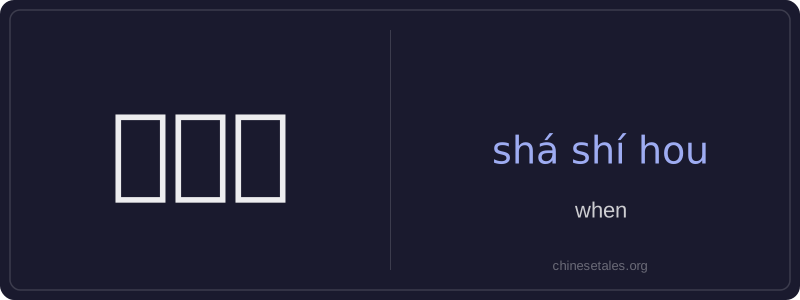
‘啥时候’ is an informal, colloquial contraction of ‘什么时候’ (shén me shí hou), meaning ‘when’. It’s widely used in spoken Mandarin, especially in northern China and in casual conversation. The character 啥 is a dialectal variant of 什么 (what), while 时 and 候 together mean ‘time’ or ‘moment’—so literally, ‘what time’. Unlike the standard form, ‘啥时候’ carries a relaxed, conversational tone and is rarely appropriate in formal writing or speeches.
This expression functions as an adverbial interrogative phrase, typically placed at the beginning or end of a question to ask about time. It can refer to past, present, or future events, and often appears with verbs like 来 (come), 走 (leave), or 吃饭 (eat). Because it’s informal, learners should avoid using it in academic, professional, or official contexts—opt instead for ‘什么时候’ in those situations.
Example Sentences
Related Words
国语
‘Guó yǔ’ literally means 'national language'—
无论谁
‘无论谁’ (wú lùn shéi) is a pronoun meaning
外语
‘外语’ literally means ‘outside language’ —
不对
不对 (bù duì) literally combines 不 (bù), meani
我的
我的 (wǒ de) is a possessive pronoun meaning 'my'
违规
违规 (wéi guī) literally means 'to violate rules
亲笔
‘亲笔’ literally means ‘one’s own hand’—comb
面条
‘面条’ (miàn tiáo) literally means ‘flour str