Word Explanation
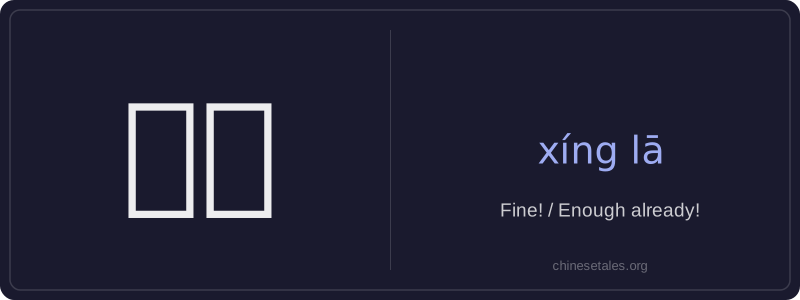
‘行啦’ is an informal, spoken interjection expressing resignation, impatience, or reluctant agreement. It literally combines 行 (xíng), meaning 'okay' or 'acceptable', and 啦 (lā), a sentence-final particle that softens tone and adds immediacy or emotional nuance—often signaling the speaker has reached their limit or wants to end a discussion. It’s not neutral: it carries subtle frustration, weariness, or playful exasperation, depending on intonation and context.
This phrase is commonly used in casual conversations among friends, family, or colleagues—never in formal writing or polite business settings. It often follows repeated requests, complaints, or minor arguments, functioning like English phrases such as 'Fine already!' or 'Enough already!' Its strength lies in its colloquial rhythm and pragmatic function: it closes a topic while revealing the speaker’s emotional stance without outright refusal.
Example Sentences
Related Words
国语
‘Guó yǔ’ literally means 'national language'—
无论谁
‘无论谁’ (wú lùn shéi) is a pronoun meaning
外语
‘外语’ literally means ‘outside language’ —
不对
不对 (bù duì) literally combines 不 (bù), meani
我的
我的 (wǒ de) is a possessive pronoun meaning 'my'
违规
违规 (wéi guī) literally means 'to violate rules
亲笔
‘亲笔’ literally means ‘one’s own hand’—comb
面条
‘面条’ (miàn tiáo) literally means ‘flour str