Word Explanation
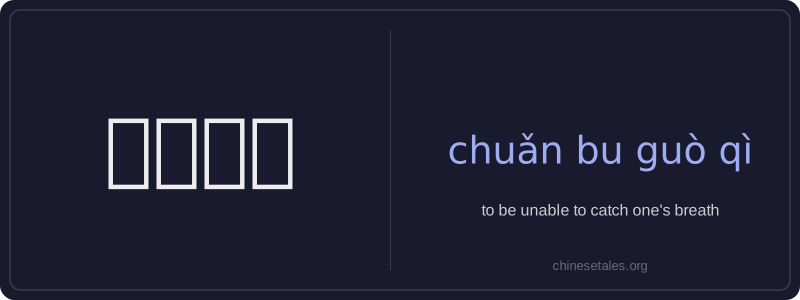
'Chuǎn bu guò qì' literally means 'cannot breathe past (or beyond) breath' — it vividly expresses the physical sensation of being unable to inhale fully or catch one’s breath. The verb 喘 means 'to pant' or 'to gasp', 不 is the negation 'not', 过 indicates failure to complete or surpass a threshold, and 气 means 'breath' or 'air'. Together, they form an idiomatic verb phrase describing acute respiratory difficulty.
This expression is commonly used in health-related contexts — for example, during asthma attacks, intense exercise, panic episodes, or when exposed to smoke or high altitudes. It conveys urgency and physical distress, not just mild shortness of breath. While it can be used figuratively (e.g., under overwhelming pressure), its primary and most natural usage remains physiological — signaling real or perceived breathing impairment that demands attention.
Example Sentences
Related Words
国语
‘Guó yǔ’ literally means 'national language'—
无论谁
‘无论谁’ (wú lùn shéi) is a pronoun meaning
外语
‘外语’ literally means ‘outside language’ —
不对
不对 (bù duì) literally combines 不 (bù), meani
我的
我的 (wǒ de) is a possessive pronoun meaning 'my'
违规
违规 (wéi guī) literally means 'to violate rules
亲笔
‘亲笔’ literally means ‘one’s own hand’—comb
面条
‘面条’ (miàn tiáo) literally means ‘flour str