Word Explanation
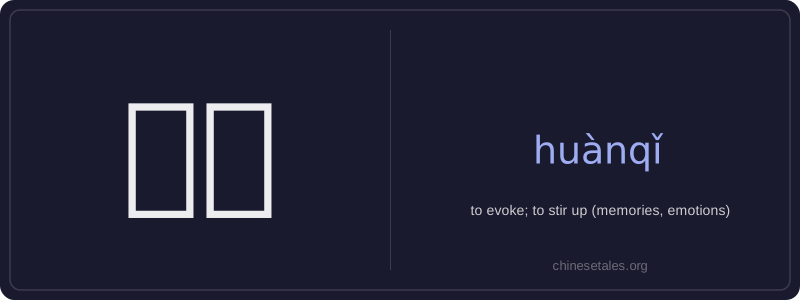
‘唤起’ is a compound verb meaning 'to evoke' or 'to stir up' — typically memories, emotions, awareness, or responses. The first character 唤 (huàn) means 'to call' or 'to summon', while 起 (qǐ) indicates initiation or emergence — together, they convey the idea of 'calling something into being or consciousness'. It’s often used in formal, literary, or reflective contexts, especially when describing psychological or emotional reactions triggered by external stimuli like music, images, or stories.
This word carries a gentle, somewhat poetic nuance — it suggests a quiet, internal awakening rather than a forceful action. You’ll commonly see it in essays, speeches, news reports about social issues, or discussions of art and history. It does not take an object marker (e.g., no ‘把’ or ‘被’ construction is needed), and it usually appears before the noun it affects: 唤起回忆, 唤起共鸣, 唤起警惕.
Example Sentences
Related Words
国语
‘Guó yǔ’ literally means 'national language'—
无论谁
‘无论谁’ (wú lùn shéi) is a pronoun meaning
外语
‘外语’ literally means ‘outside language’ —
不对
不对 (bù duì) literally combines 不 (bù), meani
我的
我的 (wǒ de) is a possessive pronoun meaning 'my'
违规
违规 (wéi guī) literally means 'to violate rules
亲笔
‘亲笔’ literally means ‘one’s own hand’—comb
面条
‘面条’ (miàn tiáo) literally means ‘flour str