Word Explanation
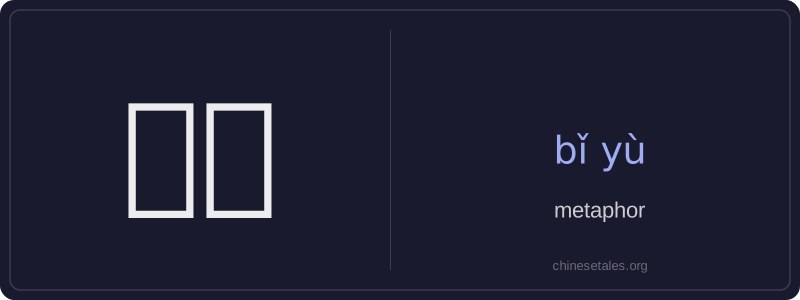
比喻 (bǐ yù) literally means 'to compare and explain' — the character 比 (bǐ) means 'to compare', and 喻 (yù) means 'to explain or make clear'. Together, they form the standard Chinese term for 'metaphor': a figure of speech that describes something by stating it *is* something else, highlighting shared qualities without using 'like' or 'as' (which would make it a simile). Metaphors are common in literature, daily conversation, idioms, and even animal-related expressions — for example, calling someone a 'tiger' to imply fierceness or courage.
In Chinese, 比喻 often appears as a noun ('a metaphor') or in verb-like constructions like '用...作比喻' ('to use ... as a metaphor'). It’s also used in educational contexts to teach abstract ideas through concrete images. Unlike English, Chinese metaphors frequently draw from nature, animals, and historical allusions, making them culturally rich but sometimes opaque to learners without background knowledge.
Example Sentences
Related Words
国语
‘Guó yǔ’ literally means 'national language'—
无论谁
‘无论谁’ (wú lùn shéi) is a pronoun meaning
外语
‘外语’ literally means ‘outside language’ —
不对
不对 (bù duì) literally combines 不 (bù), meani
我的
我的 (wǒ de) is a possessive pronoun meaning 'my'
违规
违规 (wéi guī) literally means 'to violate rules
亲笔
‘亲笔’ literally means ‘one’s own hand’—comb
面条
‘面条’ (miàn tiáo) literally means ‘flour str