Word Explanation
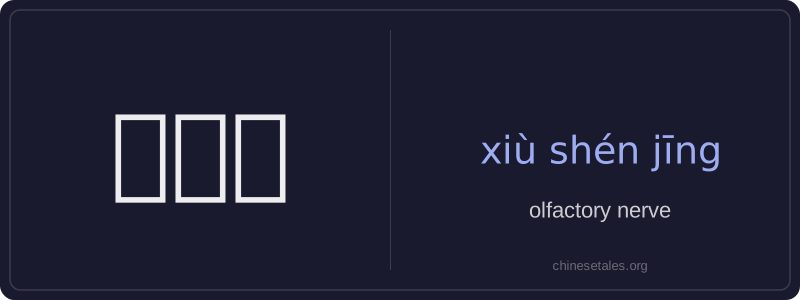
'Xiù shén jīng' literally means 'smell spirit nerve'—a direct calque of the anatomical term 'olfactory nerve.' The character 嗅 (xiù) means 'to smell' or 'olfaction'; 神 (shén) here stands for 'nerve' (short for 神经, shénjīng), not 'spirit' in the supernatural sense; and 经 (jīng) completes the compound meaning 'nerve' or 'channel,' echoing classical medical terminology. Together, they form the standard anatomical term for Cranial Nerve I, which transmits scent information from the nasal cavity to the brain.
This term appears almost exclusively in medical, biological, or neuroscience contexts—such as textbooks, clinical reports, or anatomy lectures. It is not used in everyday conversation. Learners should recognize it as a formal, technical compound, similar in structure to other cranial nerve names like 视神经 (shì shén jīng, optic nerve) or 听神经 (tīng shén jīng, auditory nerve). Its usage reflects traditional Chinese medical vocabulary adapted to modern neuroanatomy.
Example Sentences
Related Words
国语
‘Guó yǔ’ literally means 'national language'—
无论谁
‘无论谁’ (wú lùn shéi) is a pronoun meaning
外语
‘外语’ literally means ‘outside language’ —
不对
不对 (bù duì) literally combines 不 (bù), meani
我的
我的 (wǒ de) is a possessive pronoun meaning 'my'
违规
违规 (wéi guī) literally means 'to violate rules
亲笔
‘亲笔’ literally means ‘one’s own hand’—comb
面条
‘面条’ (miàn tiáo) literally means ‘flour str