Word Explanation
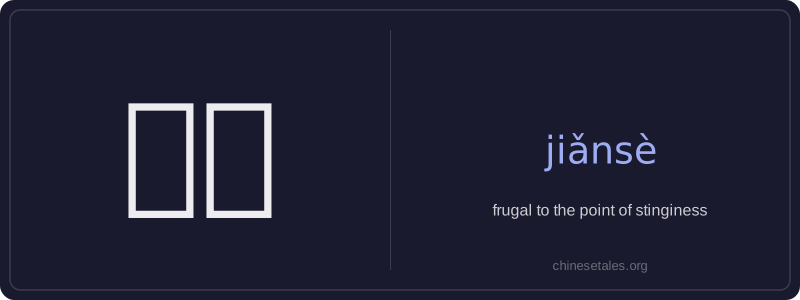
‘俭啬’ is an adjective describing extreme frugality that crosses into stinginess—where saving money or resources becomes excessive and socially inappropriate. The first character, 俭 (jiǎn), means 'frugal' or 'economical', emphasizing prudent use of resources; the second, 啬 (sè), intensifies this meaning by implying scarcity-consciousness, even hoarding or unwillingness to share. Together, they form a compound that carries a distinctly negative connotation, suggesting miserliness rather than simple thrift.
This word is often used in written or formal speech to criticize someone’s overly tight-fisted behavior—especially when it harms relationships or contradicts social expectations of generosity. It appears in classical texts and modern critiques alike, but rarely in casual conversation, where simpler terms like 小气 (xiǎoqì, 'stingy') are more common. Unlike neutral words like 节俭 (jiéjiǎn, 'thrifty'), 俭啬 implies moral disapproval and hints at psychological rigidity around money or possessions.
Example Sentences
Related Words
国语
‘Guó yǔ’ literally means 'national language'—
无论谁
‘无论谁’ (wú lùn shéi) is a pronoun meaning
外语
‘外语’ literally means ‘outside language’ —
不对
不对 (bù duì) literally combines 不 (bù), meani
我的
我的 (wǒ de) is a possessive pronoun meaning 'my'
违规
违规 (wéi guī) literally means 'to violate rules
亲笔
‘亲笔’ literally means ‘one’s own hand’—comb
面条
‘面条’ (miàn tiáo) literally means ‘flour str