Word Explanation
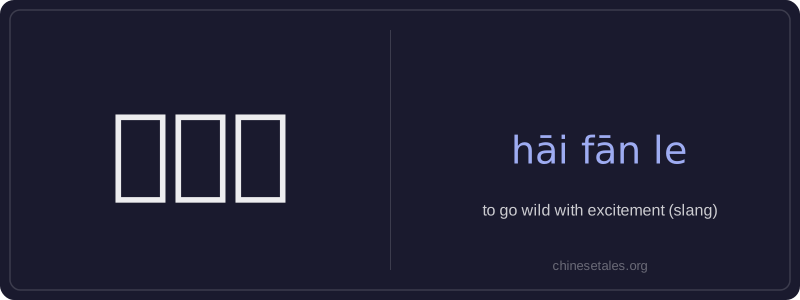
'Hi fān le' is an energetic, colloquial expression meaning 'to go wild with excitement' or 'to be totally hyped up.' The character 嗨 (hāi) is borrowed from the English interjection 'hi' but functions here as a slang verb meaning 'to get high on fun, music, or energy' — similar to 'to vibe' or 'to get lit.' 翻 (fān) literally means 'to flip' or 'to overturn,' intensifying the sense of being completely overwhelmed by exhilaration. 了 (le) marks a completed change of state, signaling that the excitement has fully taken hold.
This phrase is commonly used among young people to describe peak moments at concerts, parties, sports events, or even viral online experiences. It carries strong positive connotation and implies unrestrained, contagious enthusiasm — not just personal joy, but collective euphoria. While originally tied to party culture, it’s now widely used in casual digital communication, social media captions, and spoken Mandarin among peers.
Example Sentences
Related Words
国语
‘Guó yǔ’ literally means 'national language'—
无论谁
‘无论谁’ (wú lùn shéi) is a pronoun meaning
外语
‘外语’ literally means ‘outside language’ —
不对
不对 (bù duì) literally combines 不 (bù), meani
我的
我的 (wǒ de) is a possessive pronoun meaning 'my'
违规
违规 (wéi guī) literally means 'to violate rules
亲笔
‘亲笔’ literally means ‘one’s own hand’—comb
面条
‘面条’ (miàn tiáo) literally means ‘flour str