Word Explanation
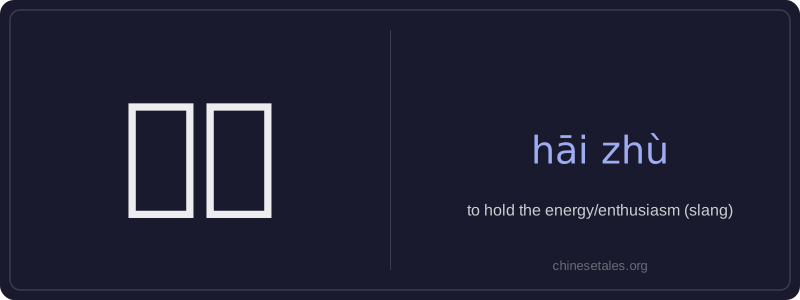
'Hi zhù' is a contemporary slang verb meaning to sustain or maintain high energy, excitement, or enthusiasm—often in social, performance, or celebratory contexts. The character 嗨 (hāi) is borrowed from English 'hi' but functions here as an onomatopoeic and emotive marker of liveliness, similar to 'hype' or 'vibe' in English slang. The character 住 (zhù) means 'to hold' or 'to keep in place', so together 嗨住 literally conveys 'holding onto the hype' or 'keeping the energy alive'.
This expression is informal and widely used among young Chinese speakers, especially online or at parties, concerts, or team-building events. It implies active effort—not just feeling excited, but consciously fueling and sustaining that mood for oneself or a group. It's rarely used in formal writing or serious settings, and carries a playful, dynamic, sometimes slightly exaggerated tone.
Example Sentences
Related Words
国语
‘Guó yǔ’ literally means 'national language'—
无论谁
‘无论谁’ (wú lùn shéi) is a pronoun meaning
外语
‘外语’ literally means ‘outside language’ —
不对
不对 (bù duì) literally combines 不 (bù), meani
我的
我的 (wǒ de) is a possessive pronoun meaning 'my'
违规
违规 (wéi guī) literally means 'to violate rules
亲笔
‘亲笔’ literally means ‘one’s own hand’—comb
面条
‘面条’ (miàn tiáo) literally means ‘flour str