Word Explanation
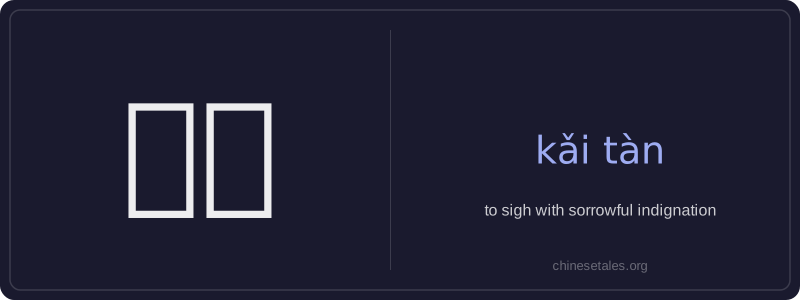
‘慨叹’ is a formal, literary verb meaning to sigh deeply with sorrowful indignation — a blend of strong emotion (grief, regret, or moral outrage) and vocal expression (a sigh). The first character 慨 (kǎi) conveys generosity of feeling, emotional intensity, or righteous indignation; the second, 叹 (tàn), means ‘to sigh’ or ‘to lament’. Together, they describe a sigh that carries both sorrow and protest — not just sadness, but sadness mixed with disapproval or helplessness in the face of injustice, loss, or decline.
This word appears frequently in written Chinese — essays, historical narratives, poetry, and formal speeches — rather than casual speech. It often follows subjects like ‘people’, ‘scholars’, or ‘historians’, and commonly pairs with objects indicating what triggers the sigh: e.g., ‘the decline of tradition’, ‘social inequality’, or ‘the passing of time’. It implies reflection and moral sensitivity, not mere emotional release.
Example Sentences
Related Words
国语
‘Guó yǔ’ literally means 'national language'—
无论谁
‘无论谁’ (wú lùn shéi) is a pronoun meaning
外语
‘外语’ literally means ‘outside language’ —
不对
不对 (bù duì) literally combines 不 (bù), meani
我的
我的 (wǒ de) is a possessive pronoun meaning 'my'
违规
违规 (wéi guī) literally means 'to violate rules
亲笔
‘亲笔’ literally means ‘one’s own hand’—comb
面条
‘面条’ (miàn tiáo) literally means ‘flour str