Word Explanation
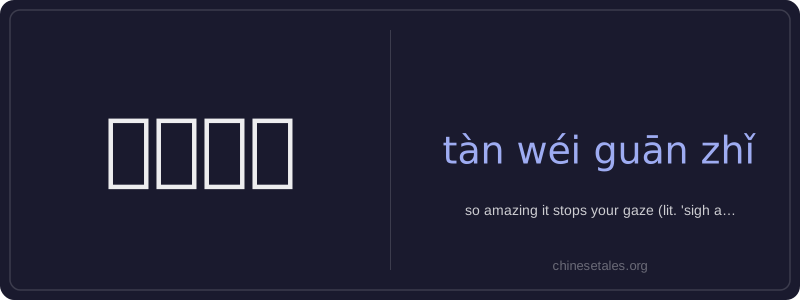
‘叹为观止’ is an elegant, literary idiom meaning something is so extraordinarily impressive or beautiful that it leaves the viewer speechless and unable to continue watching—hence the literal sense ‘sigh and stop watching.’ Each character contributes: 叹 (to sigh in awe), 为 (as, serving as), 观 (to watch), 止 (to stop). Together, they evoke a moment of stunned admiration, often used for performances, art, craftsmanship, or natural wonders.
This phrase carries strong positive connotation and formal register—it appears frequently in reviews, essays, and spoken praise of excellence. It’s not used for everyday objects or mild impressions; rather, it signals peak-level mastery or breathtaking impact. Though grammatically flexible, it most commonly functions as a predicate adjective (e.g., ‘令人叹为观止’) or as a noun phrase modifying a subject (e.g., ‘一场叹为观止的演出’).
Example Sentences
Related Words
国语
‘Guó yǔ’ literally means 'national language'—
无论谁
‘无论谁’ (wú lùn shéi) is a pronoun meaning
外语
‘外语’ literally means ‘outside language’ —
不对
不对 (bù duì) literally combines 不 (bù), meani
我的
我的 (wǒ de) is a possessive pronoun meaning 'my'
违规
违规 (wéi guī) literally means 'to violate rules
亲笔
‘亲笔’ literally means ‘one’s own hand’—comb
面条
‘面条’ (miàn tiáo) literally means ‘flour str