Word Explanation
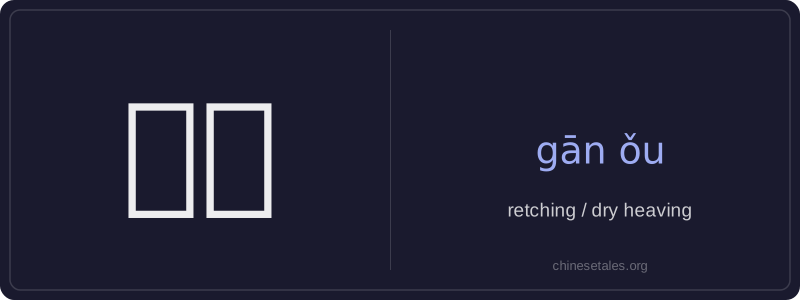
'干呕' (gān ǒu) literally combines 'dry' (干) and 'vomit' (呕), describing the involuntary, forceful convulsive movement of the stomach and throat without expelling any stomach contents — commonly called 'retching' or 'dry heaving' in English. Unlike actual vomiting (呕吐), it involves gagging, nausea, and abdominal contractions but no expulsion of material. It often occurs due to motion sickness, early pregnancy, strong odors, anxiety, or gastrointestinal irritation.
The term is neutral in register and widely used in both spoken and written Chinese — especially in medical contexts, personal health descriptions, and everyday conversation about discomfort. While 干 can mean 'dry', 'do', or 'concerned with', here it functions descriptively, emphasizing the absence of vomitus. 呕 specifically denotes the act of expelling stomach contents or the preparatory reflex; together, the compound focuses on the physical sensation and effort without output.
Example Sentences
Related Words
国语
‘Guó yǔ’ literally means 'national language'—
无论谁
‘无论谁’ (wú lùn shéi) is a pronoun meaning
外语
‘外语’ literally means ‘outside language’ —
不对
不对 (bù duì) literally combines 不 (bù), meani
我的
我的 (wǒ de) is a possessive pronoun meaning 'my'
违规
违规 (wéi guī) literally means 'to violate rules
亲笔
‘亲笔’ literally means ‘one’s own hand’—comb
面条
‘面条’ (miàn tiáo) literally means ‘flour str