Word Explanation
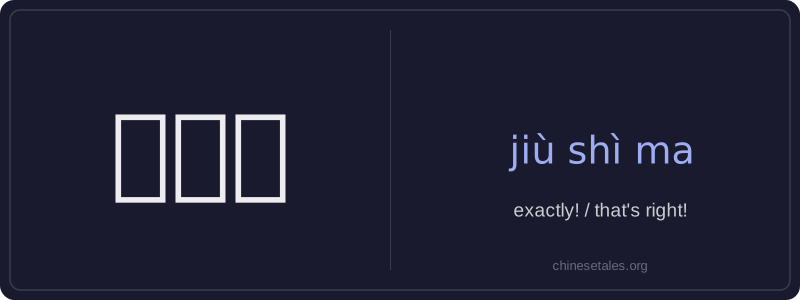
'就是嘛' is a colloquial interjection used to express strong agreement, affirmation, or validation — like saying 'Exactly!' or 'That's right!' in English. It combines 就 (jiù, 'precisely' or 'just'), 是 (shì, 'is' or 'to be'), and 嘛 (ma, a sentence-final particle that softens tone and adds emphasis or shared understanding). Together, they convey warmth, empathy, or enthusiastic alignment with what someone else has said.
This phrase is commonly heard in informal spoken Chinese — among friends, family, or colleagues — especially when responding to someone’s opinion, complaint, or observation. It often carries emotional resonance: it reassures the speaker they’re understood, and subtly encourages continuation of the conversation. Unlike formal equivalents, 就是嘛 feels personal and supportive, not neutral or detached.
Example Sentences
Related Words
国语
‘Guó yǔ’ literally means 'national language'—
无论谁
‘无论谁’ (wú lùn shéi) is a pronoun meaning
外语
‘外语’ literally means ‘outside language’ —
不对
不对 (bù duì) literally combines 不 (bù), meani
我的
我的 (wǒ de) is a possessive pronoun meaning 'my'
违规
违规 (wéi guī) literally means 'to violate rules
亲笔
‘亲笔’ literally means ‘one’s own hand’—comb
面条
‘面条’ (miàn tiáo) literally means ‘flour str