Word Explanation
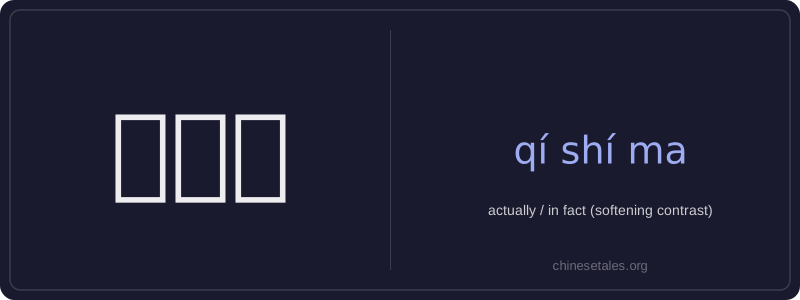
其實嘛 is a conversational adverbial phrase used to gently introduce a contrast, correction, or clarification—often softening what might otherwise sound blunt or confrontational. Literally, 其 (qí) means 'its' or 'that', 實 (shí) means 'real' or 'actual', and 嗎 (ma) is a sentence-final particle expressing mild emphasis or hesitation. Together, they form a cohesive pragmatic unit that signals the speaker is about to offer a more truthful, nuanced, or empathetic perspective—frequently after someone else has made an assumption or statement.
This phrase is common in spoken Mandarin, especially in friendly, informal exchanges involving feelings, opinions, or gentle disagreement. It carries warmth and tact: rather than saying 'you’re wrong', it implies 'let me share another side of things'. It rarely appears in formal writing and is almost always placed at the beginning of a clause or sentence, followed by a pause or comma in speech. Its tone is reassuring, modest, and relationally sensitive—making it especially useful when discussing emotions, misunderstandings, or personal preferences.
Example Sentences
Related Words
国语
‘Guó yǔ’ literally means 'national language'—
无论谁
‘无论谁’ (wú lùn shéi) is a pronoun meaning
外语
‘外语’ literally means ‘outside language’ —
不对
不对 (bù duì) literally combines 不 (bù), meani
我的
我的 (wǒ de) is a possessive pronoun meaning 'my'
违规
违规 (wéi guī) literally means 'to violate rules
亲笔
‘亲笔’ literally means ‘one’s own hand’—comb
面条
‘面条’ (miàn tiáo) literally means ‘flour str