Word Explanation
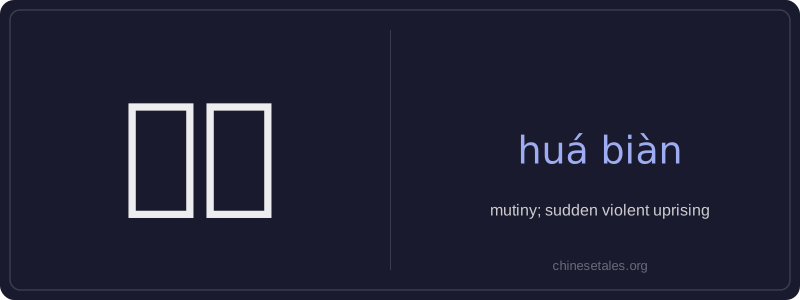
'Huá biàn' literally combines 'huá' (a loud, chaotic noise or commotion) and 'biàn' (change, upheaval, or sudden transformation), together evoking a sudden, noisy, and violent reversal of order—specifically, a mutiny. It refers to an organized revolt by soldiers, sailors, or other subordinates against their commanding officers or governing authority. Unlike general 'rebellion' (fǎn luàn) or 'uprising' (qǐ yì), 哗变 carries strong connotations of betrayal from within a disciplined hierarchy, often involving armed force and occurring in military, naval, or institutional settings.
The term is formal and historically rooted; it appears frequently in historical narratives, political analyses, and news reports about coups or insurrections. While it can describe civilian unrest, its core usage remains tied to breaches of military discipline or institutional loyalty. The first character 哗 emphasizes the clamorous, disruptive nature of the event, while 变 signals the abrupt, irreversible shift in power or allegiance.
Example Sentences
Related Words
国语
‘Guó yǔ’ literally means 'national language'—
无论谁
‘无论谁’ (wú lùn shéi) is a pronoun meaning
外语
‘外语’ literally means ‘outside language’ —
不对
不对 (bù duì) literally combines 不 (bù), meani
我的
我的 (wǒ de) is a possessive pronoun meaning 'my'
违规
违规 (wéi guī) literally means 'to violate rules
亲笔
‘亲笔’ literally means ‘one’s own hand’—comb
面条
‘面条’ (miàn tiáo) literally means ‘flour str