Word Explanation
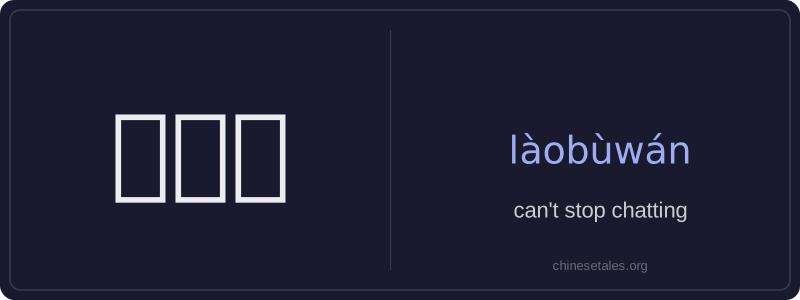
‘唠不完’ literally combines ‘lào’ (to chat idly or chatter), ‘bù’ (not), and ‘wán’ (to finish), forming a vivid verb phrase meaning ‘can’t stop chatting’ or ‘talks endlessly’. It conveys the sense of continuous, often light-hearted or nostalgic conversation—usually between close friends or family members—where topics flow effortlessly and no one feels ready to end the exchange. The phrase carries a warm, slightly affectionate tone, sometimes implying gentle teasing about someone’s talkativeness.
This expression is commonly used in informal spoken Chinese and rarely appears in formal writing. It emphasizes duration and emotional ease rather than content; it’s not about arguing or discussing seriously, but about the joyful, unforced rhythm of familiar conversation. You’ll often hear it describing elderly relatives reminiscing, friends catching up after a long time, or even pets ‘talking’ playfully in personified contexts—but its core remains human-to-human warmth and continuity.
Example Sentences
Related Words
国语
‘Guó yǔ’ literally means 'national language'—
无论谁
‘无论谁’ (wú lùn shéi) is a pronoun meaning
外语
‘外语’ literally means ‘outside language’ —
不对
不对 (bù duì) literally combines 不 (bù), meani
我的
我的 (wǒ de) is a possessive pronoun meaning 'my'
违规
违规 (wéi guī) literally means 'to violate rules
亲笔
‘亲笔’ literally means ‘one’s own hand’—comb
面条
‘面条’ (miàn tiáo) literally means ‘flour str