Word Explanation
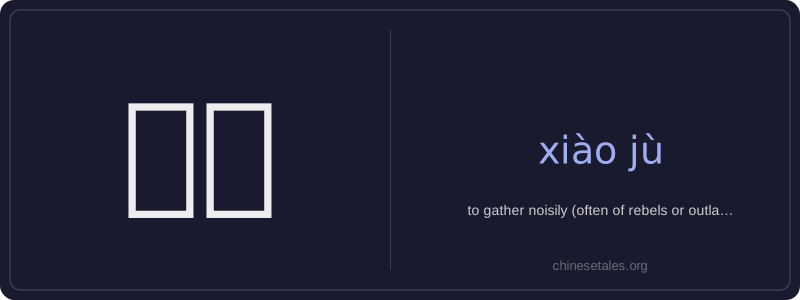
‘啸聚’ is a classical Chinese verb meaning to gather noisily and disorderly, typically describing rebels, bandits, or outlaws assembling in remote mountain areas. The first character 啸 (xiào) means 'to howl' or 'to shriek', evoking the loud, wild cries of wolves or apes — an image often used metaphorically for unruly human groups. The second character 聚 (jù) means 'to gather' or 'to congregate'. Together, 啸聚 emphasizes both the vocal intensity and the collective, often threatening, nature of the assembly.
This term appears frequently in historical texts, novels like Water Margin, and idioms such as 啸聚山林 (xiào jù shān lín, 'to gather and raise rebellion in the mountains'). It carries strong literary and slightly archaic flavor; modern spoken Chinese rarely uses it outside formal writing, historical narratives, or rhetorical expressions about chaos or resistance.
Example Sentences
Related Words
国语
‘Guó yǔ’ literally means 'national language'—
无论谁
‘无论谁’ (wú lùn shéi) is a pronoun meaning
外语
‘外语’ literally means ‘outside language’ —
不对
不对 (bù duì) literally combines 不 (bù), meani
我的
我的 (wǒ de) is a possessive pronoun meaning 'my'
违规
违规 (wéi guī) literally means 'to violate rules
亲笔
‘亲笔’ literally means ‘one’s own hand’—comb
面条
‘面条’ (miàn tiáo) literally means ‘flour str