Word Explanation
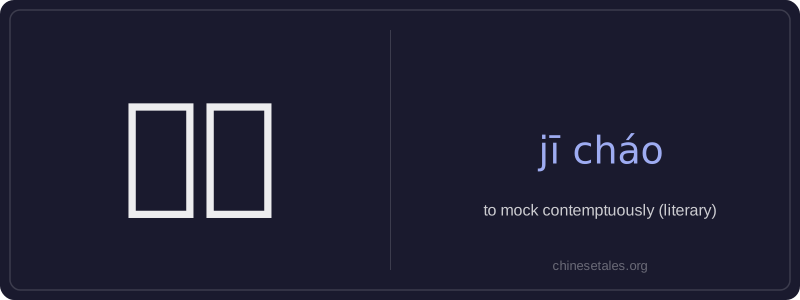
讥嘲 is a literary, formal verb meaning 'to mock contemptuously' — implying scornful, often biting ridicule that carries moral or intellectual disdain. The first character, 讥 (jī), conveys criticism or satire directed at flaws or absurdities; the second, 嘲 (cháo), intensifies it with derisive laughter or sneering. Together, they form a compound emphasizing not just mockery but judgmental, superior disdain — frequently found in classical texts, essays, or modern writing aiming for rhetorical weight.
This word rarely appears in casual speech and is more common in written Chinese, especially in political commentary, literary criticism, or historical narratives. It often targets hypocrisy, incompetence, or pretension, and usually implies the mocker holds themselves above the target. Because of its sharp, negative tone, it’s unsuitable for light teasing or friendly banter — those contexts call for milder terms like 嘲笑 or 取笑.
Example Sentences
Related Words
国语
‘Guó yǔ’ literally means 'national language'—
无论谁
‘无论谁’ (wú lùn shéi) is a pronoun meaning
外语
‘外语’ literally means ‘outside language’ —
不对
不对 (bù duì) literally combines 不 (bù), meani
我的
我的 (wǒ de) is a possessive pronoun meaning 'my'
违规
违规 (wéi guī) literally means 'to violate rules
亲笔
‘亲笔’ literally means ‘one’s own hand’—comb
面条
‘面条’ (miàn tiáo) literally means ‘flour str