Word Explanation
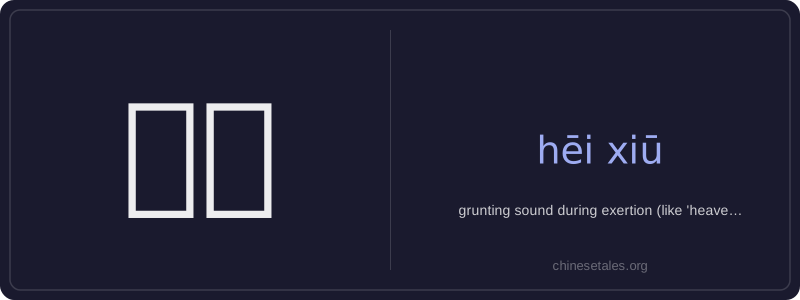
'Hēi xiū' is an onomatopoeic interjection that mimics the short, forceful grunting sound people make when exerting physical effort—like lifting a heavy box, pushing a stalled car, or climbing steep stairs. Neither character carries its usual independent meaning here: '嘿' (hēi) normally functions as a casual 'hey' or attention-getter, and '咻' (xiū) often imitates a swift whooshing sound (e.g., of wind or a bullet), but together they form a fixed reduplicative expression focused purely on vocalized effort.
This term is informal, colloquial, and vividly expressive—it appears frequently in spoken Chinese, cartoons, comic books, and animated descriptions of physical labor or struggle. It’s rarely used in formal writing but adds energy and authenticity to dialogue or narration depicting exertion. Unlike neutral terms like '用力' (yòng lì, 'to exert force'), 'hēi xiū' conveys immediacy, strain, and sometimes gentle humor or camaraderie among people working together.
Example Sentences
Related Words
国语
‘Guó yǔ’ literally means 'national language'—
无论谁
‘无论谁’ (wú lùn shéi) is a pronoun meaning
外语
‘外语’ literally means ‘outside language’ —
不对
不对 (bù duì) literally combines 不 (bù), meani
我的
我的 (wǒ de) is a possessive pronoun meaning 'my'
违规
违规 (wéi guī) literally means 'to violate rules
亲笔
‘亲笔’ literally means ‘one’s own hand’—comb
面条
‘面条’ (miàn tiáo) literally means ‘flour str