Word Explanation
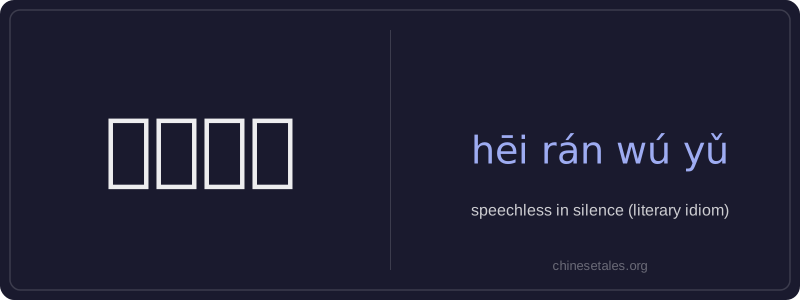
‘嘿然无语’ is a literary, four-character idiom meaning 'speechless in silence'—describing a state where someone is so stunned, moved, or overwhelmed that they fall completely silent, not out of ignorance or reluctance, but from deep emotional impact. The characters combine meaningfully: 嘿 (hēi) is an archaic variant of ‘默’ (silent), 然 (rán) functions as a suffix indicating manner ('in a... way'), 无 (wú) means 'without', and 语 (yǔ) means 'speech' or 'words'. Together, they evoke a profound, dignified stillness—not awkward silence, but resonant quiet.
This idiom appears frequently in classical and modern literary writing, especially to portray solemn, awe-filled, or emotionally charged moments: witnessing natural grandeur, receiving unexpected news, or confronting moral truth. It carries a tone of reverence or introspection, rarely used in casual speech. Unlike colloquial expressions for silence (e.g., 没话说), 嘿然无语 suggests inner depth and gravity, often implying shared understanding or unspoken agreement among people present.
Example Sentences
Related Words
国语
‘Guó yǔ’ literally means 'national language'—
无论谁
‘无论谁’ (wú lùn shéi) is a pronoun meaning
外语
‘外语’ literally means ‘outside language’ —
不对
不对 (bù duì) literally combines 不 (bù), meani
我的
我的 (wǒ de) is a possessive pronoun meaning 'my'
违规
违规 (wéi guī) literally means 'to violate rules
亲笔
‘亲笔’ literally means ‘one’s own hand’—comb
面条
‘面条’ (miàn tiáo) literally means ‘flour str