Word Explanation
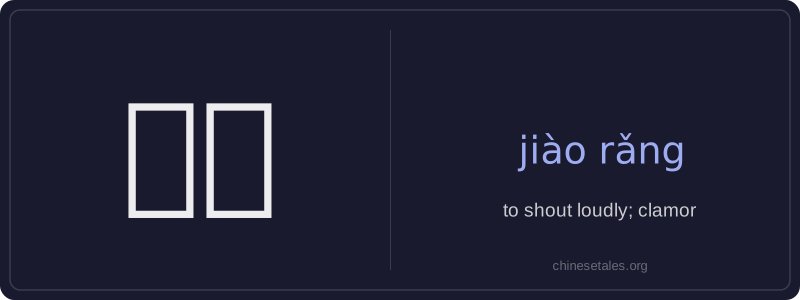
‘叫嚷’ is a compound verb meaning 'to shout loudly' or 'to clamor'—often with connotations of anger, urgency, or loss of composure. Both characters individually mean 'to shout': 叫 (jiào) emphasizes vocalizing loudly, often to call attention or express strong emotion; 嚷 (rǎng) adds intensity and repetition, suggesting persistent, unrestrained noise. Together, they form a vivid, slightly informal verb that implies emotional volatility—not just speaking up, but doing so in a disruptive, uncontrolled way.
This word commonly appears in narratives describing arguments, protests, children’s tantrums, or chaotic public scenes. It carries a mildly negative or critical tone, implying the shouting is excessive or unreasonable. While it can be used in neutral reporting (e.g., news), it rarely appears in formal writing or polite conversation. Unlike simple verbs like 说话 (to speak) or 喊 (to shout), 叫嚷 emphasizes duration, volume, and emotional charge—making it ideal for descriptive, expressive contexts.
Example Sentences
Related Words
国语
‘Guó yǔ’ literally means 'national language'—
无论谁
‘无论谁’ (wú lùn shéi) is a pronoun meaning
外语
‘外语’ literally means ‘outside language’ —
不对
不对 (bù duì) literally combines 不 (bù), meani
我的
我的 (wǒ de) is a possessive pronoun meaning 'my'
违规
违规 (wéi guī) literally means 'to violate rules
亲笔
‘亲笔’ literally means ‘one’s own hand’—comb
面条
‘面条’ (miàn tiáo) literally means ‘flour str