Word Explanation
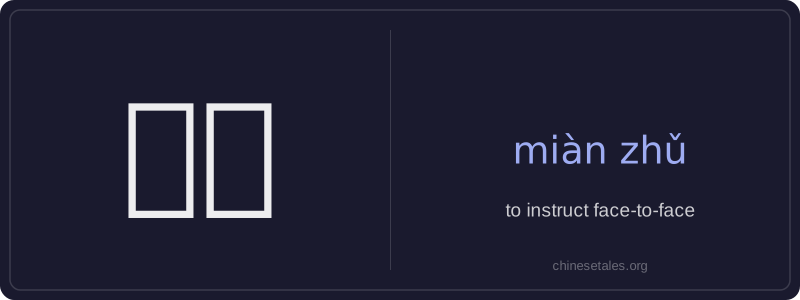
面嘱 is a formal verb meaning 'to instruct face-to-face'—emphasizing direct, in-person communication rather than written or remote instruction. The character 面 (miàn) means 'face' or 'in person,' while 嘱 (zhǔ) means 'to instruct,' 'to entrust,' or 'to urge.' Together, they convey the nuance of giving important guidance or directions during a personal meeting, often implying seriousness, responsibility, or urgency.
This term is commonly used in professional and institutional contexts—especially in healthcare, education, and government—where accountability and clarity matter. It frequently appears in official records, medical notes, or formal reports to indicate that instructions were delivered directly to the recipient. While grammatically a verb, 面嘱 can function as a past-tense verb phrase (e.g., 医生面嘱患者...) and rarely appears in casual speech; it carries a respectful, slightly bureaucratic tone.
Example Sentences
Related Words
国语
‘Guó yǔ’ literally means 'national language'—
无论谁
‘无论谁’ (wú lùn shéi) is a pronoun meaning
外语
‘外语’ literally means ‘outside language’ —
不对
不对 (bù duì) literally combines 不 (bù), meani
我的
我的 (wǒ de) is a possessive pronoun meaning 'my'
违规
违规 (wéi guī) literally means 'to violate rules
亲笔
‘亲笔’ literally means ‘one’s own hand’—comb
面条
‘面条’ (miàn tiáo) literally means ‘flour str