Word Explanation
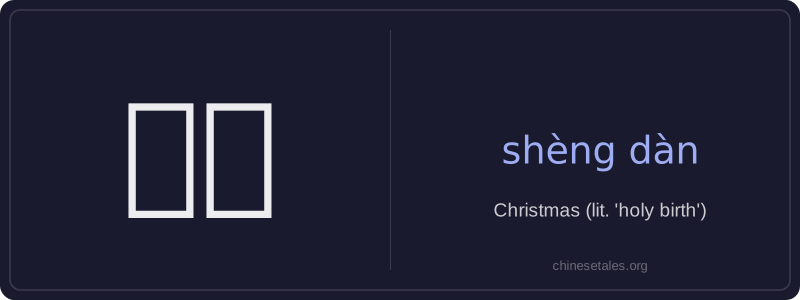
'Christmas' is a compound noun formed from two characters: 圣 (shèng), meaning 'holy', 'sacred', or 'saintly', and 诞 (dàn), meaning 'birth' or 'to be born'. Together, they literally mean 'holy birth', directly referencing the Christian celebration of the birth of Jesus Christ. Though rooted in Christianity, 圣诞 is widely used in secular contexts across Chinese-speaking communities — for holiday shopping, decorations, gift-giving, and festive events — much like 'Christmas' in English.
The term is almost always used as a standalone noun or in compounds such as 圣诞节 (shèng dàn jié, 'Christmas Day') or 圣诞树 (shèng dàn shù, 'Christmas tree'). It rarely appears without the cultural framework of December 25th and associated traditions, even among non-Christians in China and overseas Chinese communities. Pronunciation is consistently shèng dàn, with third tone on both syllables.
Example Sentences
Related Words
国语
‘Guó yǔ’ literally means 'national language'—
无论谁
‘无论谁’ (wú lùn shéi) is a pronoun meaning
外语
‘外语’ literally means ‘outside language’ —
不对
不对 (bù duì) literally combines 不 (bù), meani
我的
我的 (wǒ de) is a possessive pronoun meaning 'my'
违规
违规 (wéi guī) literally means 'to violate rules
亲笔
‘亲笔’ literally means ‘one’s own hand’—comb
面条
‘面条’ (miàn tiáo) literally means ‘flour str