Word Explanation
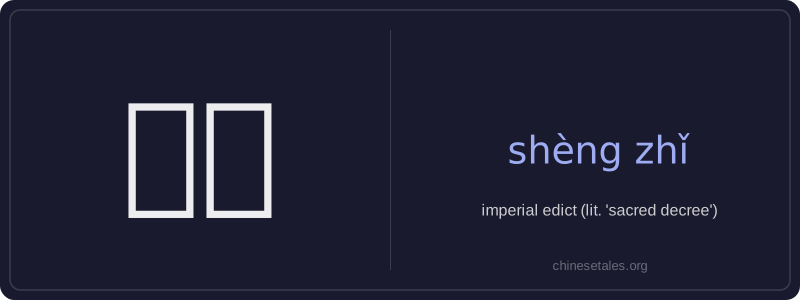
‘Shèng zhǐ’ literally means 'sacred decree'—a formal edict issued by the emperor in imperial China. The character 圣 (shèng) conveys holiness, authority, and supreme status, while 旨 (zhǐ) means 'decree', 'order', or 'will'. Together, they signify an official proclamation carrying the full weight of imperial power, often delivered orally by eunuchs or written on yellow silk with vermilion ink. These edicts governed everything from appointments and punishments to tax policies and military commands.
Today, 圣旨 is used almost exclusively in historical contexts—books, dramas, museums, or academic discussions about imperial administration. It carries strong connotations of absolute monarchy, ritual formality, and hierarchical tradition. You won’t hear it in modern government or daily speech; its usage is firmly rooted in pre-20th-century Chinese history and cultural memory.
Example Sentences
Related Words
国语
‘Guó yǔ’ literally means 'national language'—
无论谁
‘无论谁’ (wú lùn shéi) is a pronoun meaning
外语
‘外语’ literally means ‘outside language’ —
不对
不对 (bù duì) literally combines 不 (bù), meani
我的
我的 (wǒ de) is a possessive pronoun meaning 'my'
违规
违规 (wéi guī) literally means 'to violate rules
亲笔
‘亲笔’ literally means ‘one’s own hand’—comb
面条
‘面条’ (miàn tiáo) literally means ‘flour str