Word Explanation
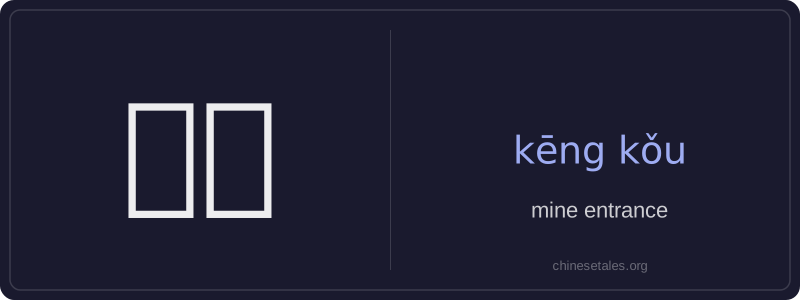
'Kēng kǒu' literally combines 坑 (kēng), meaning 'pit' or 'shaft', and 口 (kǒu), meaning 'mouth' or 'opening'. Together, they form a compound noun that specifically refers to the physical entrance or opening of a mine — where miners enter, equipment is lowered, and ore is extracted. It emphasizes the functional access point rather than the entire mining site.
This term is used almost exclusively in industrial, geological, or safety-related contexts — for example, in mining reports, safety regulations, or local descriptions of mining areas. It is not used metaphorically (unlike 'pit' in English) and does not apply to quarries, caves, or construction sites unless they function as active mines. While historically common in coal-mining regions like Shanxi or Hebei, the word remains standard in technical and administrative Chinese.
Example Sentences
Related Words
国语
‘Guó yǔ’ literally means 'national language'—
无论谁
‘无论谁’ (wú lùn shéi) is a pronoun meaning
外语
‘外语’ literally means ‘outside language’ —
不对
不对 (bù duì) literally combines 不 (bù), meani
我的
我的 (wǒ de) is a possessive pronoun meaning 'my'
违规
违规 (wéi guī) literally means 'to violate rules
亲笔
‘亲笔’ literally means ‘one’s own hand’—comb
面条
‘面条’ (miàn tiáo) literally means ‘flour str