Word Explanation
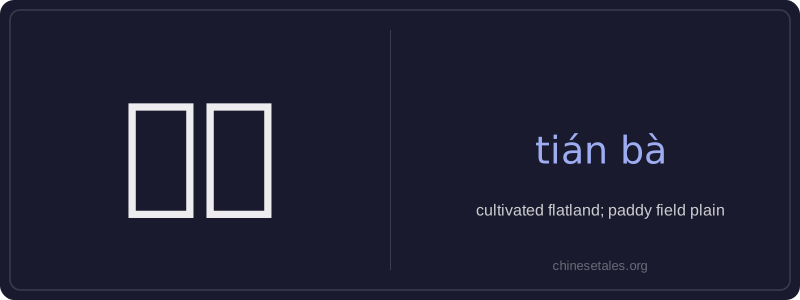
‘田坝’ (tián bà) refers to a flat, open area of land that has been cleared and cultivated for agriculture—especially rice paddies—in mountainous or hilly regions of southern and southwestern China. The character 田 means 'field' or 'farmland', while 坝 originally denotes a natural or artificial embankment or flat terrace formed by sediment deposition or human construction; together, they evoke a fertile, level expanse amid otherwise rugged terrain.
This term is commonly used in geographical descriptions, rural development reports, and local place names—particularly in Yunnan, Guizhou, and Sichuan provinces—where such plains are vital for farming and settlement. Unlike generic terms like 田野 (tiányě, 'countryside') or 稻田 (dàotián, 'rice field'), 田坝 emphasizes the topographical feature: a broad, low-lying, human-modified plain suitable for intensive cultivation. It carries a regional, somewhat literary or descriptive nuance rather than everyday conversational use.
Example Sentences
Related Words
国语
‘Guó yǔ’ literally means 'national language'—
无论谁
‘无论谁’ (wú lùn shéi) is a pronoun meaning
外语
‘外语’ literally means ‘outside language’ —
不对
不对 (bù duì) literally combines 不 (bù), meani
我的
我的 (wǒ de) is a possessive pronoun meaning 'my'
违规
违规 (wéi guī) literally means 'to violate rules
亲笔
‘亲笔’ literally means ‘one’s own hand’—comb
面条
‘面条’ (miàn tiáo) literally means ‘flour str