Word Explanation
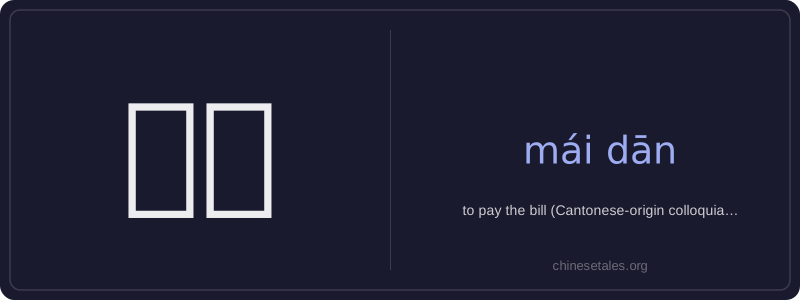
‘埋单’ (mái dān) is a colloquial verb meaning ‘to pay the bill’, especially in restaurants or group social settings. Though written with 埋 (mái, ‘to bury’) and 单 (dān, ‘bill’ or ‘list’), the term does not literally mean ‘bury the bill’. Instead, it originates from Cantonese, where 埋 carries the sense of ‘to settle’ or ‘to complete an action’, and 单 refers to the itemized check. Over time, this phrase entered Mandarin spoken language—especially in southern China and informal urban contexts—as a vivid, slightly playful alternative to the standard 买单 (mǎi dān).
It’s commonly used when someone volunteers to cover the cost for others, or when clarifying who will handle payment. While widely understood across China today, it retains a casual, conversational tone and is rarely used in formal writing or official speech. Note that it’s almost always transitive and typically followed by a noun (e.g., 埋单) or used in imperative or narrative constructions (e.g., 他主动埋单了).
Example Sentences
Related Words
国语
‘Guó yǔ’ literally means 'national language'—
无论谁
‘无论谁’ (wú lùn shéi) is a pronoun meaning
外语
‘外语’ literally means ‘outside language’ —
不对
不对 (bù duì) literally combines 不 (bù), meani
我的
我的 (wǒ de) is a possessive pronoun meaning 'my'
违规
违规 (wéi guī) literally means 'to violate rules
亲笔
‘亲笔’ literally means ‘one’s own hand’—comb
面条
‘面条’ (miàn tiáo) literally means ‘flour str