Word Explanation
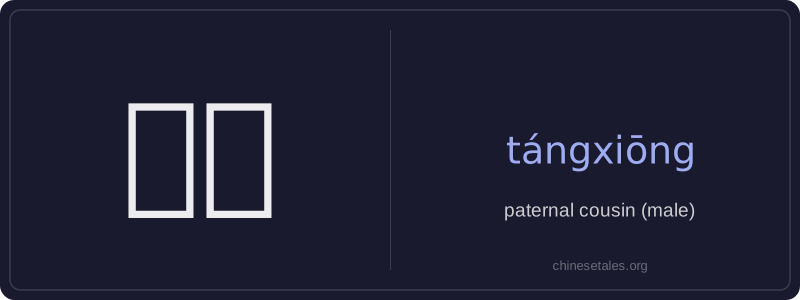
'Tángxiong' literally combines 堂 (táng), meaning 'paternal line' or 'same ancestral hall', and 兄 (xiōng), meaning 'older brother'. It specifically refers to a male cousin who shares the same paternal grandfather — that is, the son of one’s father’s brother. Unlike the broader term 表兄弟 (biǎo xiōngdì), which covers maternal or cross-cousin relationships, 堂兄 strictly denotes kinship through the father’s side.
This term reflects traditional Chinese kinship terminology, where distinctions based on lineage, gender, and relative age are precise and socially significant. It is commonly used in family introductions, formal documents, or when discussing inheritance and clan responsibilities. While younger generations sometimes use more general terms like 表哥 or even just 哥哥 in casual speech, 堂兄 remains standard in official contexts and family trees.
Example Sentences
Related Words
国语
‘Guó yǔ’ literally means 'national language'—
无论谁
‘无论谁’ (wú lùn shéi) is a pronoun meaning
外语
‘外语’ literally means ‘outside language’ —
不对
不对 (bù duì) literally combines 不 (bù), meani
我的
我的 (wǒ de) is a possessive pronoun meaning 'my'
违规
违规 (wéi guī) literally means 'to violate rules
亲笔
‘亲笔’ literally means ‘one’s own hand’—comb
面条
‘面条’ (miàn tiáo) literally means ‘flour str