Word Explanation
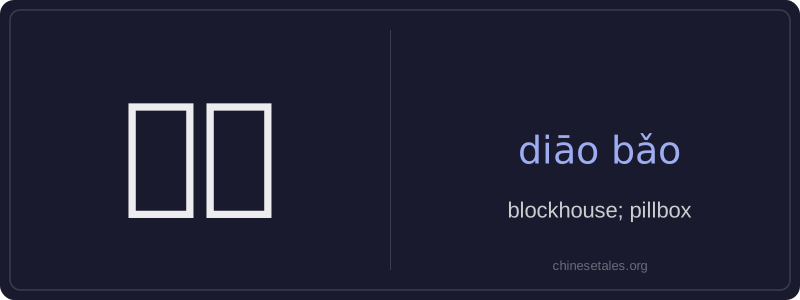
‘碉堡’ (diāo bǎo) is a compound noun meaning ‘blockhouse’ or ‘pillbox’—a small, fortified military structure designed for defense, typically made of stone, concrete, or earth, with narrow openings for firing weapons. The first character 碉 (diāo) originally referred to a tall, watchtower-like structure, often built by ethnic minorities in southwest China; the second character 堡 (bǎo) means ‘fort’ or ‘stronghold’. Together, they evoke a compact, heavily defended position used historically in warfare, border defense, or local security.
While historically tied to 20th-century Chinese military history—especially the Long March and wartime resistance—the word now appears in historical texts, documentaries, and preserved sites like those along the Great Wall or in rural Sichuan and Yunnan. It’s rarely used for modern military installations (where terms like 掩体 yǎntǐ or 工事 gōngshì are preferred), but remains vivid in descriptions of heritage architecture and wartime narratives.
Example Sentences
Related Words
国语
‘Guó yǔ’ literally means 'national language'—
无论谁
‘无论谁’ (wú lùn shéi) is a pronoun meaning
外语
‘外语’ literally means ‘outside language’ —
不对
不对 (bù duì) literally combines 不 (bù), meani
我的
我的 (wǒ de) is a possessive pronoun meaning 'my'
违规
违规 (wéi guī) literally means 'to violate rules
亲笔
‘亲笔’ literally means ‘one’s own hand’—comb
面条
‘面条’ (miàn tiáo) literally means ‘flour str