Word Explanation
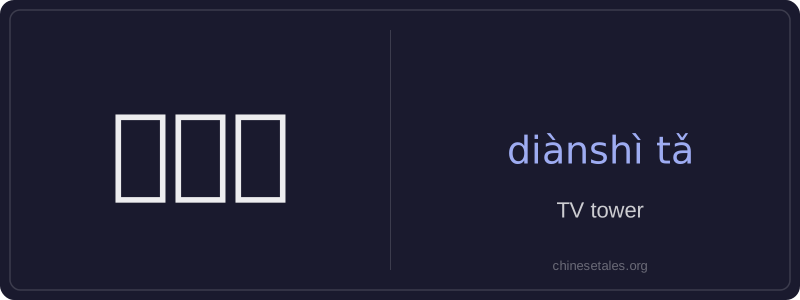
'电视塔' (diànshì tǎ) literally means 'electric vision tower' — combining 电 (diàn, 'electric'), 视 (shì, 'to see' or 'vision'), and 塔 (tǎ, 'tower'). It refers specifically to a tall structure built to transmit television and radio signals over a wide area. These towers are often prominent landmarks in cities and may also serve as observation decks or tourist attractions.
While functionally related to broadcasting infrastructure, 电视塔 is used primarily as a proper or common noun for the physical structure itself — not the broadcast service or company. It’s distinct from generic terms like 天线 (tiānxiàn, 'antenna') or 发射台 (fāshè tái, 'transmission station'), emphasizing height, visibility, and architectural presence. Famous examples include the Canton Tower in Guangzhou and the Oriental Pearl Tower in Shanghai.
Example Sentences
Related Words
国语
‘Guó yǔ’ literally means 'national language'—
无论谁
‘无论谁’ (wú lùn shéi) is a pronoun meaning
外语
‘外语’ literally means ‘outside language’ —
不对
不对 (bù duì) literally combines 不 (bù), meani
我的
我的 (wǒ de) is a possessive pronoun meaning 'my'
违规
违规 (wéi guī) literally means 'to violate rules
亲笔
‘亲笔’ literally means ‘one’s own hand’—comb
面条
‘面条’ (miàn tiáo) literally means ‘flour str