Word Explanation
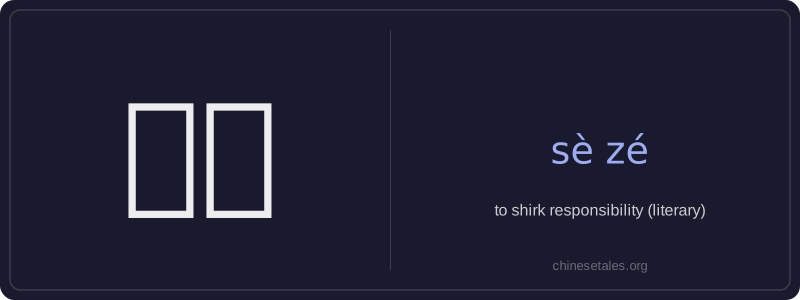
‘塞责’ is a literary, formal verb meaning ‘to shirk responsibility’ or ‘to discharge one’s duty perfunctorily—merely to appease or satisfy formal requirements.’ The character 塞 (sè) literally means ‘to stop up,’ ‘to plug,’ or ‘to fill,’ while 责 (zé) means ‘responsibility’ or ‘duty.’ Together, they evoke the image of hastily ‘plugging’ or ‘filling in’ a duty—not with sincerity or thoroughness, but just enough to avoid criticism or fulfill a bare minimum. It carries a strong negative connotation, implying negligence, laziness, or moral evasion.
This term appears frequently in formal writing, official critiques, historical texts, and journalistic commentary—especially when condemning bureaucratic indifference, superficial work, or ethical dereliction. It is rarely used in casual speech; native speakers typically choose more colloquial alternatives like 敷衍了事 (fūyǎn liǎoshì) or 马马虎虎 (mǎmǎhūhū) in everyday contexts. Its tone is critical and often moralistic, reflecting Confucian ideals of conscientious duty.
Example Sentences
Related Words
国语
‘Guó yǔ’ literally means 'national language'—
无论谁
‘无论谁’ (wú lùn shéi) is a pronoun meaning
外语
‘外语’ literally means ‘outside language’ —
不对
不对 (bù duì) literally combines 不 (bù), meani
我的
我的 (wǒ de) is a possessive pronoun meaning 'my'
违规
违规 (wéi guī) literally means 'to violate rules
亲笔
‘亲笔’ literally means ‘one’s own hand’—comb
面条
‘面条’ (miàn tiáo) literally means ‘flour str