Word Explanation
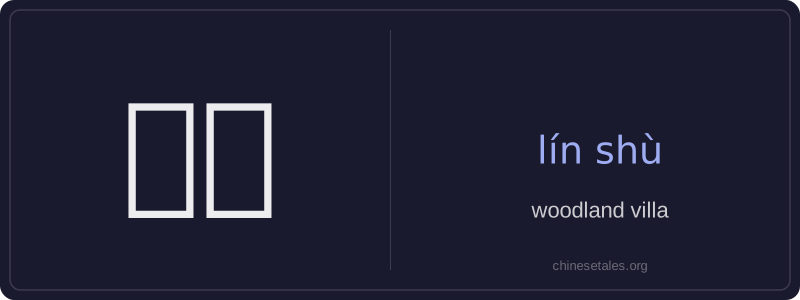
林墅 (lín shù) literally combines 林 (lín), meaning 'forest' or 'grove', and 墅 (shù), meaning 'villa' or 'country house'. Together, it denotes a villa situated in or surrounded by woodland—emphasizing seclusion, natural beauty, and rustic elegance. Unlike generic terms like 别墅 (biéshù), which simply means 'villa', 林墅 carries poetic and aesthetic connotations, often evoking images of quiet retreats nestled among trees.
This word is relatively literary and formal, appearing more frequently in descriptive writing, real estate marketing for premium rural properties, or travel literature than in everyday speech. It’s not used for urban apartments or standard suburban homes; the 'woodland' element is essential to its meaning. While 林 can refer to any wooded area, in 林墅 it suggests mature, scenic trees—not just sparse shrubs or newly planted saplings.
Example Sentences
Related Words
国语
‘Guó yǔ’ literally means 'national language'—
无论谁
‘无论谁’ (wú lùn shéi) is a pronoun meaning
外语
‘外语’ literally means ‘outside language’ —
不对
不对 (bù duì) literally combines 不 (bù), meani
我的
我的 (wǒ de) is a possessive pronoun meaning 'my'
违规
违规 (wéi guī) literally means 'to violate rules
亲笔
‘亲笔’ literally means ‘one’s own hand’—comb
面条
‘面条’ (miàn tiáo) literally means ‘flour str