Word Explanation
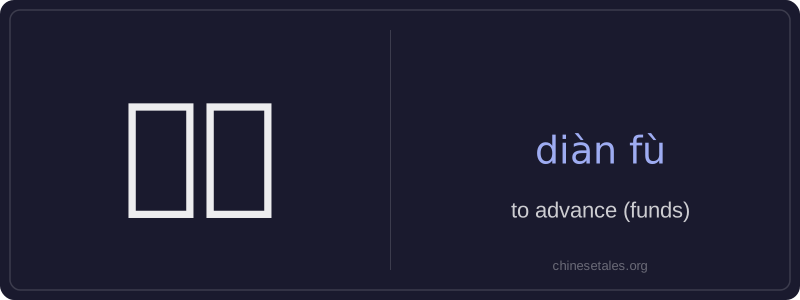
'垫付' (diàn fù) is a verb meaning 'to advance (funds)' — that is, to pay money on someone else’s behalf or before reimbursement is received. The character 垫 (diàn) literally means 'to pad' or 'to lay underneath', suggesting the idea of placing something temporarily in support; 付 (fù) means 'to pay'. Together, they convey the sense of 'paying first as a temporary measure', often implying expectation of later repayment or formal reimbursement. This term is commonly used in formal, administrative, or financial contexts — especially in healthcare, business, or government services.
It typically appears in written or semi-formal spoken Chinese, such as insurance claims, workplace expense reports, or hospital billing procedures. While it can be used transitively ('The company垫付了医疗费'), it is rarely used without an object in standard speech. Unlike casual alternatives like 先付 (xiān fù, 'pay first'), 垫付 carries a stronger implication of official responsibility or institutional arrangement.
Example Sentences
Related Words
国语
‘Guó yǔ’ literally means 'national language'—
无论谁
‘无论谁’ (wú lùn shéi) is a pronoun meaning
外语
‘外语’ literally means ‘outside language’ —
不对
不对 (bù duì) literally combines 不 (bù), meani
我的
我的 (wǒ de) is a possessive pronoun meaning 'my'
违规
违规 (wéi guī) literally means 'to violate rules
亲笔
‘亲笔’ literally means ‘one’s own hand’—comb
面条
‘面条’ (miàn tiáo) literally means ‘flour str