Word Explanation
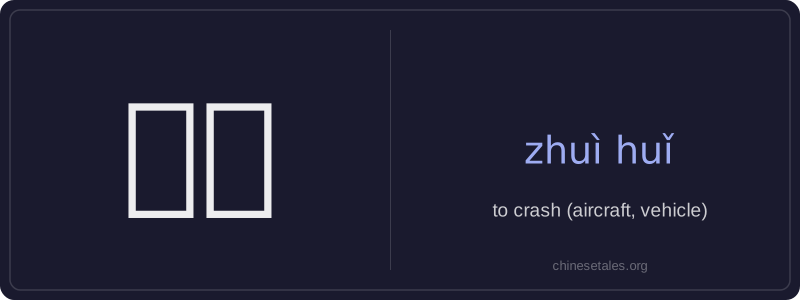
'坠毁' (zhuì huǐ) is a compound verb meaning 'to crash'—specifically referring to aircraft, helicopters, rockets, or sometimes high-speed vehicles falling from the sky and being destroyed upon impact. The first character 坠 (zhuì) means 'to fall' or 'to drop', often with a sense of sudden, uncontrolled descent; the second character 毁 (huǐ) means 'to destroy' or 'to ruin'. Together, they emphasize both the downward motion and the resulting catastrophic damage—so it's not just 'falling' but 'falling destructively'. It’s commonly used in news reports, aviation safety contexts, and official statements.
This term carries a formal, serious tone and is rarely used for minor incidents or ground-only accidents (e.g., car collisions). It implies loss of control, altitude, and structural integrity—typically involving flight. Unlike general terms like '出事' (to have an accident), '坠毁' conveys severity and finality, often implying fatalities or total loss of the vehicle. It appears frequently in headlines about military jets, commercial airliners, or space launch failures.
Example Sentences
Related Words
国语
‘Guó yǔ’ literally means 'national language'—
无论谁
‘无论谁’ (wú lùn shéi) is a pronoun meaning
外语
‘外语’ literally means ‘outside language’ —
不对
不对 (bù duì) literally combines 不 (bù), meani
我的
我的 (wǒ de) is a possessive pronoun meaning 'my'
违规
违规 (wéi guī) literally means 'to violate rules
亲笔
‘亲笔’ literally means ‘one’s own hand’—comb
面条
‘面条’ (miàn tiáo) literally means ‘flour str