Word Explanation
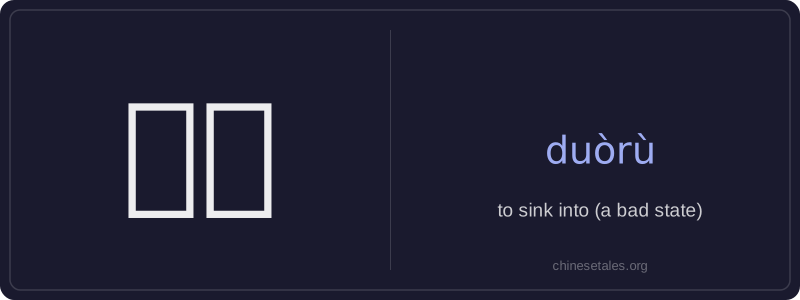
‘堕入’ is a compound verb meaning 'to sink into' or 'to fall into'—almost always describing an involuntary, negative, or deteriorating transition into an undesirable state. The character 堕 (duò) originally meant 'to fall' or 'to decline', carrying connotations of moral or physical deterioration; 入 (rù) means 'to enter'. Together, they form a literary and slightly formal expression emphasizing loss of control, descent, or entrapment—commonly used with abstract nouns like despair, darkness, illusion, or addiction.
This phrase is rarely used for neutral or positive states; it strongly implies danger, helplessness, or irreversible change. It appears frequently in literature, news reports on social issues, psychological descriptions, and moral commentary. While grammatically similar to other 'verb + 入' compounds (e.g., 走入, 进入), 堕入 is distinct in its negative semantic load and elevated register—it’s unsuitable for casual speech or everyday contexts like entering a room or starting a hobby.
Example Sentences
Related Words
国语
‘Guó yǔ’ literally means 'national language'—
无论谁
‘无论谁’ (wú lùn shéi) is a pronoun meaning
外语
‘外语’ literally means ‘outside language’ —
不对
不对 (bù duì) literally combines 不 (bù), meani
我的
我的 (wǒ de) is a possessive pronoun meaning 'my'
违规
违规 (wéi guī) literally means 'to violate rules
亲笔
‘亲笔’ literally means ‘one’s own hand’—comb
面条
‘面条’ (miàn tiáo) literally means ‘flour str