Word Explanation
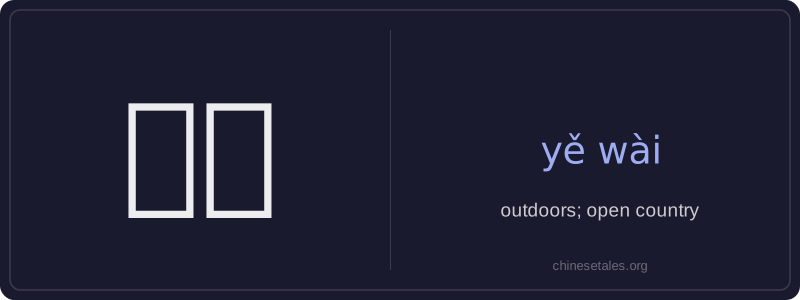
'野外' literally combines '野' (yě), meaning 'wild,' 'rural,' or 'uncultivated,' and '外' (wài), meaning 'outside' or 'outdoors.' Together, they refer to open, undeveloped land beyond human settlements — such as forests, mountains, grasslands, or fields — where nature predominates and infrastructure is minimal. It emphasizes naturalness and remoteness, not just any outdoor space like a city park or backyard.
This term is commonly used in contexts involving exploration, fieldwork, wildlife observation, camping, or survival training. It carries a neutral-to-positive connotation of freedom and authenticity but may also imply lack of convenience or potential danger. Unlike generic 'outdoors' terms, '野外' specifically evokes expansiveness, wildness, and separation from urban life — think of biologists studying animals in the field or hikers trekking far from roads.
Example Sentences
Related Words
国语
‘Guó yǔ’ literally means 'national language'—
无论谁
‘无论谁’ (wú lùn shéi) is a pronoun meaning
外语
‘外语’ literally means ‘outside language’ —
不对
不对 (bù duì) literally combines 不 (bù), meani
我的
我的 (wǒ de) is a possessive pronoun meaning 'my'
违规
违规 (wéi guī) literally means 'to violate rules
亲笔
‘亲笔’ literally means ‘one’s own hand’—comb
面条
‘面条’ (miàn tiáo) literally means ‘flour str