Word Explanation
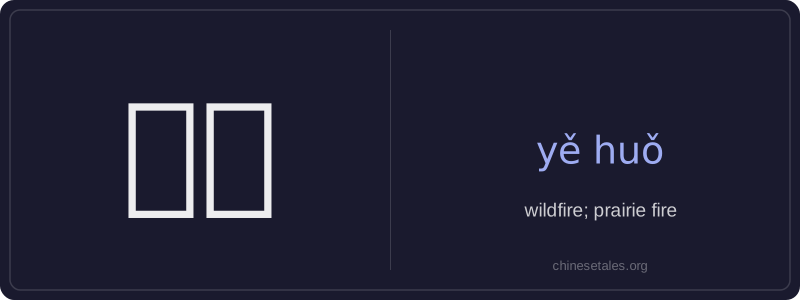
‘Yě huǒ’ literally combines 野 (yě), meaning ‘wild’ or ‘untamed’, and 火 (huǒ), meaning ‘fire’. Together, it refers to an uncontrolled fire that spreads rapidly across natural landscapes—especially grasslands, forests, or shrublands—often ignited by lightning, human activity, or dry conditions. Unlike household or industrial fires, 野火 specifically evokes imagery of nature reclaiming or being devastated by flame, and it carries ecological and sometimes poetic connotations.
In Chinese, 野火 appears frequently in environmental reporting, news about disasters, and literary contexts—such as classical poetry where it symbolizes resilience (e.g., ‘wildfire cannot burn away the grass; spring breeze brings it back to life’). It is neutral in register but leans formal or descriptive; it is not used for small, contained fires like campfires or cooking flames.
Example Sentences
Related Words
国语
‘Guó yǔ’ literally means 'national language'—
无论谁
‘无论谁’ (wú lùn shéi) is a pronoun meaning
外语
‘外语’ literally means ‘outside language’ —
不对
不对 (bù duì) literally combines 不 (bù), meani
我的
我的 (wǒ de) is a possessive pronoun meaning 'my'
违规
违规 (wéi guī) literally means 'to violate rules
亲笔
‘亲笔’ literally means ‘one’s own hand’—comb
面条
‘面条’ (miàn tiáo) literally means ‘flour str