Word Explanation
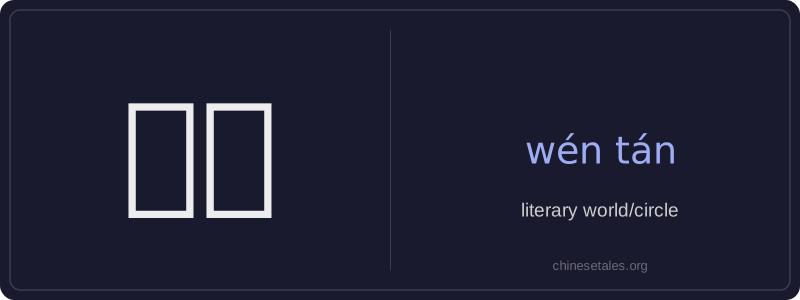
‘文坛’ literally combines ‘文’ (wén), meaning ‘literature’ or ‘writing’, and ‘坛’ (tán), meaning ‘altar’, ‘platform’, or ‘forum’. Historically, ‘坛’ evoked a sacred or authoritative gathering place—so ‘文坛’ metaphorically denotes the influential, often elite, community where writers, critics, publishers, and literary institutions interact. It’s not a physical location but a conceptual sphere: the Chinese literary world as a social and professional domain.
The term carries connotations of prestige, influence, and sometimes rivalry—it’s where reputations are made or challenged, major awards are debated, and literary trends emerge. You’ll encounter it in discussions about authors’ status, publishing controversies, or cultural policy. While neutral in form, its usage often implies a degree of institutional weight or public visibility—not just any group of readers or hobbyist writers, but those shaping mainstream literary discourse.
Example Sentences
Related Words
国语
‘Guó yǔ’ literally means 'national language'—
无论谁
‘无论谁’ (wú lùn shéi) is a pronoun meaning
外语
‘外语’ literally means ‘outside language’ —
不对
不对 (bù duì) literally combines 不 (bù), meani
我的
我的 (wǒ de) is a possessive pronoun meaning 'my'
违规
违规 (wéi guī) literally means 'to violate rules
亲笔
‘亲笔’ literally means ‘one’s own hand’—comb
面条
‘面条’ (miàn tiáo) literally means ‘flour str