Word Explanation
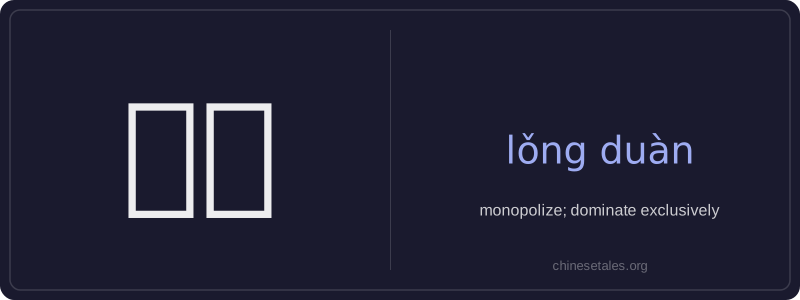
'垄断' (lǒng duàn) literally combines 垄 (lǒng), meaning 'ridge' or 'raised mound', and 断 (duàn), meaning 'to cut off' or 'to sever'. Historically, it evoked the image of a ridge cutting off access—hence the modern sense of excluding others from competition. As a verb, it means to monopolize or dominate a market, industry, or resource exclusively, often implying unfair or legally restricted control.
The term is most commonly used in economic, business, and regulatory contexts—for example, when a single company controls supply, sets prices unilaterally, or blocks competitors. It carries a slightly negative connotation, suggesting anti-competitive behavior. While occasionally used metaphorically (e.g., 'monopolizing attention'), its core usage remains formal and institutional, frequently appearing in news reports, policy documents, and academic discussions about market fairness and antitrust regulation.
Example Sentences
Related Words
国语
‘Guó yǔ’ literally means 'national language'—
无论谁
‘无论谁’ (wú lùn shéi) is a pronoun meaning
外语
‘外语’ literally means ‘outside language’ —
不对
不对 (bù duì) literally combines 不 (bù), meani
我的
我的 (wǒ de) is a possessive pronoun meaning 'my'
违规
违规 (wéi guī) literally means 'to violate rules
亲笔
‘亲笔’ literally means ‘one’s own hand’—comb
面条
‘面条’ (miàn tiáo) literally means ‘flour str